Watch Capote
- R
- 2006
- 1 hr 54 min
-
7.3 (139,728)
Capote is a biographical drama film released in 2005 that chronicles the life and work of celebrated author Truman Capote. Directed by Bennet Miller, the movie stars Philip Seymour Hoffman in the titular role and features a strong supporting cast comprising actors like Clifton Collins Jr. and Catherine Keener. Set in the early 1960s, the movie opens with the shocking murder of a Kansas family. Truman Capote, a New York-based writer renowned for his wit and sharp observational skills, takes an interest in the case and travels to Kansas to cover the trial. Accompanied by his childhood friend and fellow author Nelle Harper Lee (played by Keener), Capote immerses himself in the town's rural life and spends time with the suspects and their families.
As the investigation progresses, Capote becomes increasingly fascinated with the perpetrators. He establishes a rapport with one of them, a young man named Perry Smith (Collins Jr.), and starts to view him with a mixture of pity and admiration. Capote's obsession with the case and his relationship with Perry eventually culminate in the publication of his seminal work, In Cold Blood, a groundbreaking book that blurs the line between fiction and non-fiction.
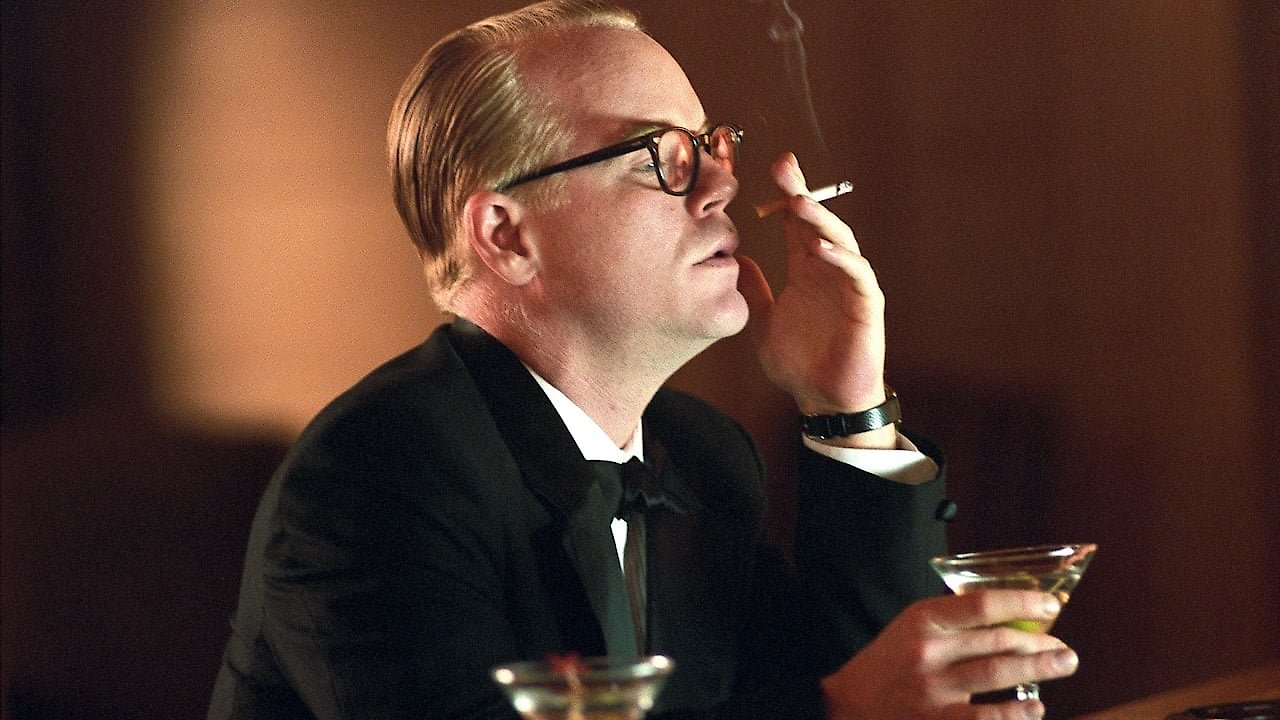
One of the defining features of Capote is Philip Seymour Hoffman's mesmerizing performance in the lead role. Known for his range and versatility, Hoffman delivers a nuanced portrayal of Capote as a complex and flawed character. He captures the author's trademark charm and charisma while also revealing his darker side, including his manipulative and selfish tendencies. In the scenes where Capote interviews Perry and delves into his psyche, Hoffman imbues his performance with a sense of deep empathy and vulnerability.
The supporting cast also delivers excellent performances, with Clifton Collins Jr. standing out as the enigmatic and troubled Perry Smith. Collins Jr. infuses his character with a raw intensity and a sense of wounded pride that makes him both menacing and sympathetic. Catherine Keener also shines as Nelle Harper Lee, Capote's confidante and foil. Keener captures Lee's dry wit and understated intelligence, and her interactions with Hoffman are some of the movie's most memorable scenes.
Aside from the acting, Capote boasts strong direction, beautiful cinematography, and a compelling script. Bennet Miller, a first-time director at the time, brings a steady hand to the movie's pacing and tone, allowing the story to unfold gradually but with a sense of urgency. The cinematography by Adam Kimmel captures the stark beauty of the Kansas plains and adds to the movie's moody and atmospheric feel. Finally, the script by Dan Futterman balances the elements of true crime, literary biography, and psychological drama in a way that feels organic and seamless.
Overall, Capote is a powerful and haunting film that explores themes of ambition, art, and morality. It sheds light on the complicated relationship between writers and their subjects, and the ethical dilemmas that arise when storytelling merges with reality. While not an easy movie to watch, Capote is a masterful work that showcases the talents of all involved, and serves as a fitting tribute to Truman Capote's enduring legacy.
Capote is a 2006 crime movie with a runtime of 1 hour and 54 minutes. It has received mostly positive reviews from critics and viewers, who have given it an IMDb score of 7.3 and a MetaScore of 88.