Watch Gangs of New York
- R
- 2002
- 2 hr 46 min
-
7.5 (469,684)
As a powerful historical epic set in the mid-19th century, Gangs of New York (2002) is a breathtaking and intriguing film that showcases the lives of two men from rival gangs who confront each other in a struggle of power and prominence in the violent underworld of New York City. Directed by Martin Scorsese, this film offers a compelling and imaginative vision of America's history and the great struggles that are waged by cultures and social groups.
The story is set in the era of the American Civil War, specifically in the year 1862, when the city of New York was a hive of gang activity and violent crime. The neighborhood of Five Points was the epicenter of this criminal underworld, and it was here that two rival gangs fought for supremacy. The first gang, made up of Irish immigrants and led by the charismatic Priest Vallon (Liam Neeson), is determined to prevent the American-born Nativists from gaining control of the city's criminal underworld. Against this backdrop, the young and vengeful Amsterdam Vallon (played by Leonardo DiCaprio) sets out to avenge his father's death by killing the merciless Bill Cutting (played by Daniel Day-Lewis), the leader of the rival gang.
In order to achieve his goal, Amsterdam must infiltrate Cutting's gang, which he does by befriending the beautiful Jenny (Cameron Diaz), who is secretly the lover of Cutting. As Amsterdam and Jenny develop a romantic relationship, the tension between the two gangs grows, culminating in a final, bloody showdown in the streets of Five Points.
One of the standout elements of Gangs of New York is the masterful work of the actors involved in the project. The performances of DiCaprio, Day-Lewis, and Diaz are nuanced and deeply moving, with each actor bringing a unique energy and dynamism to their character. Day-Lewis's portrayal of Bill Cutting, in particular, is a masterclass in acting, with his portrayal of the ruthless gang leader being both terrifying and compelling to watch.
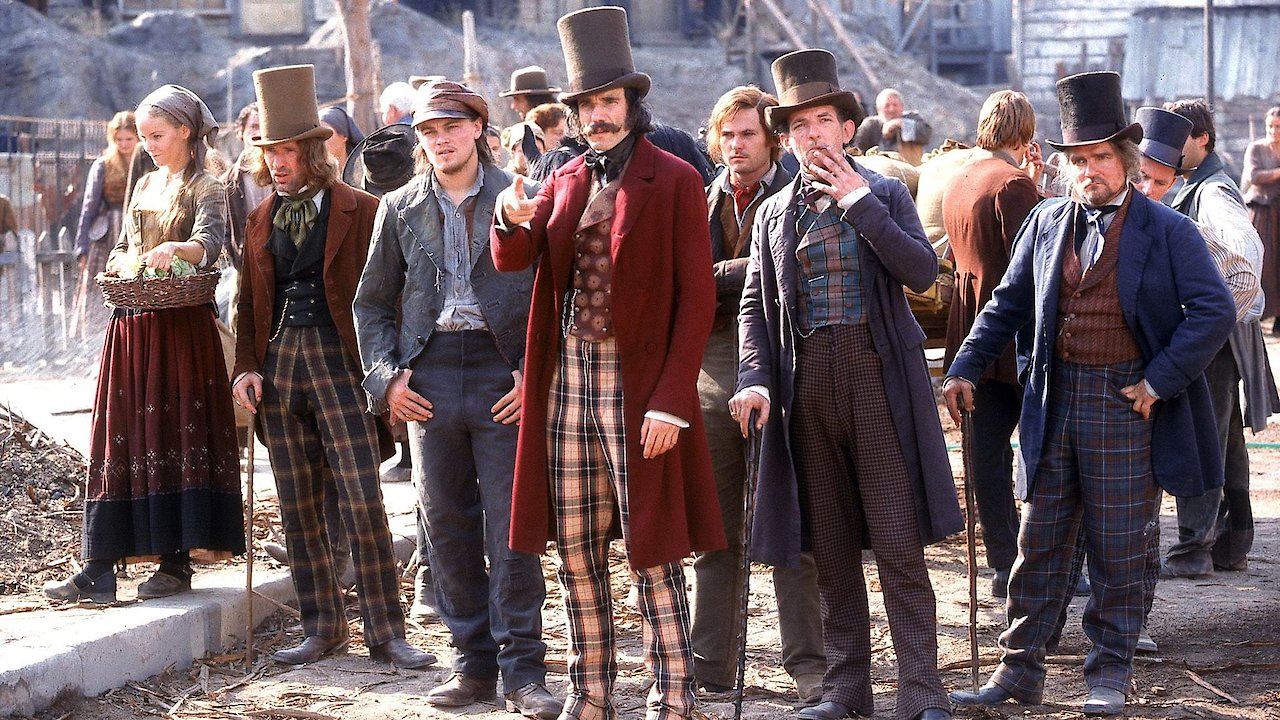
Furthermore, Scorsese's direction is impeccable, with the film bringing to life the teeming, chaotic streets of New York City in the 1860s in a vivid and visceral way. The film features some epic action sequences, including a breathtaking riot in the streets of Five Points, and the staging and choreography of these scenes are nothing short of phenomenal. The production design, costume design, and cinematography are also remarkable, bringing a sense of scope and grandeur to the story that make it feel like a true cinematic masterpiece.
Another major strength of Gangs of New York is its exploration of themes related to identity, citizenship, and the struggle for power in a complex and multicultural society. The film examines the ways in which different social groups in America, such as Irish immigrants and Nativist Americans, grapple with notions of belonging and identity, and how these tensions can often lead to violence and conflict. Through the character of Amsterdam Vallon, the film also explores questions of revenge and redemption, as he tries to navigate the tricky terrain of his own identity as both an Irish immigrant and the son of a slain gang leader.
In conclusion, Gangs of New York is a cinematic triumph that stands as one of Martin Scorsese's most ambitious and powerful films. With a stellar cast, stunning visuals, and a gripping story that tackles major themes with sensitivity and insight, the film is an unforgettable experience that will leave a lasting impression on any viewer.
Gangs of New York is a 2002 drama with a runtime of 2 hours and 46 minutes. It has received mostly positive reviews from critics and viewers, who have given it an IMDb score of 7.5 and a MetaScore of 72.