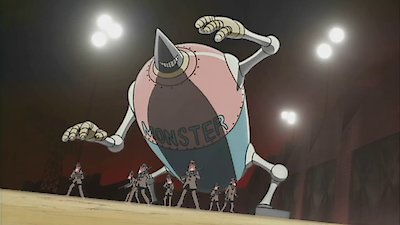
Tetsujin 28 (2004) Season 1 Episode 1 The Resurrection of Shotaro
- April 7, 2004
- 24 min
Tetsujin 28 (2004) is a Japanese anime series that is a direct adaptation of the manga of the same name by Mitsuteru Yokoyama, who is highly regarded for pioneering the Mecha genre. The 2004 rendition of Tetsujin 28 is a modern retelling aiming to closely align with the original manga's storyline and dark atmosphere, unlike the lighthearted 1960s version.
Season 1, Episode 1, titled The Resurrection of Shotaro, introduces us to a world where Japan is still recovering from the scars of war. In a time where technology and the echoes of conflict interweave, the episode unfolds in a place bearing the weight of past battles and the ambition of human ingenuity.
The story begins with a young boy named Shotaro Kaneda, an intelligent and inquisitive protagonist living in a bustling city that is trying to leave its wartime past behind. Shotaro, a boy detective famous for his sharp intellect and bravery, finds himself plunged into a mystery that is intertwined with his own history. The series instills a nostalgic atmosphere, with hints of an era defined both by ruins and the overwhelming urge to rebuild.
In The Resurrection of Shotaro, relics of the war come to light when a massive, seemingly indestructible robot known as Tetsujin 28 is discovered. This steel giant, with its enigmatic past and force of destruction, stirs the city's populace and authorities into anxiety. The robot's presence is both a marvel of science and a potential threat, a juxtaposition that rekindles complicated feelings from the time of conflict.
While the robot’s reappearance raises multiple questions and fears, Shotaro's connection to Tetsujin 28 runs deeper than anyone initially realizes. We delve into mysterious and fraught relationships that bring human drama to the forefront. As past narratives and current intrigues start to merge, the boy’s sense of justice and quest for truth put him on a path that will test his resolve and courage.
As the episode progresses, darker elements and players emerge, reflecting a world where the battle between technological progress and its potential for destruction is constantly at odds. Through these multifarious storylines, The Resurrection of Shotaro sets the stage for a series that contemplates themes of redemption, responsibility, and the human cost of technology when bound by the perils of warfare.
Here, we witness the mechanics of the robot come to life, striking a balance between human control and the robot's innate power, which seems to transcend its metallic framework. This symbiotic relationship between Shotaro and Tetsujin 28 paves the way for a deeper narrative exploration into the bond between creator and creation, boy and machine, casting a thoughtful gaze upon the intersection where humanity meets mechanical might.
Integral to this episode is the visual and aural presentation — crisp, refined animation that hearkens back to the original manga’s design, coupled with an atmospheric soundscape that underscores the tension and wonder permeating throughout the story. Unlike its predecessors, this version of Tetsujin 28 delves into a color palette that wields shadows and light to encapsulate a city trapped between its dark past and the potential brilliance of its future.
The Resurrection of Shotaro does not merely serve as an introduction to characters and setting; it stands as a contemplative narrative that juggles the dualities of post-war Japan. It poses philosophical questions about the role of power and technology in human society through its young protagonist’s eyes and the dormant titan that has come to be his destiny.
As for the characters that surround Shotaro, they are layered with complexity. The narrative is adept at providing glimpses into their motivations and concerns through tight pacing and expressive dialogue, ensuring viewers are compelled to invest in their journeys. The interactions they have with one another and the towering Tetsujin speak volumes, setting the wheels in motion for a dynamic and thought-provoking series.
Action sequences serve not only to excite but to reflect deeper undercurrents of a society gripped by the trauma of what it has endured, symbolized by the sudden emergence and might of Tetsujin 28. These sequences are framed by the need to understand what this power should mean for a world desperately trying to look forward, while still being haunted by its past.
As the first episode draws to a close, viewers are left with a complex and layered tableau — a mix of suspense, nostalgia, introspection, and the anticipation of a journey into the soul of a nation embarking on societal and personal reconstruction. With The Resurrection of Shotaro, Tetsujin 28 (2004) bids viewers to tread a path of discovery alongside Shotaro and his iron companion, promising a series where the animation medium transcends entertainment to reflect profound narrative depth.
