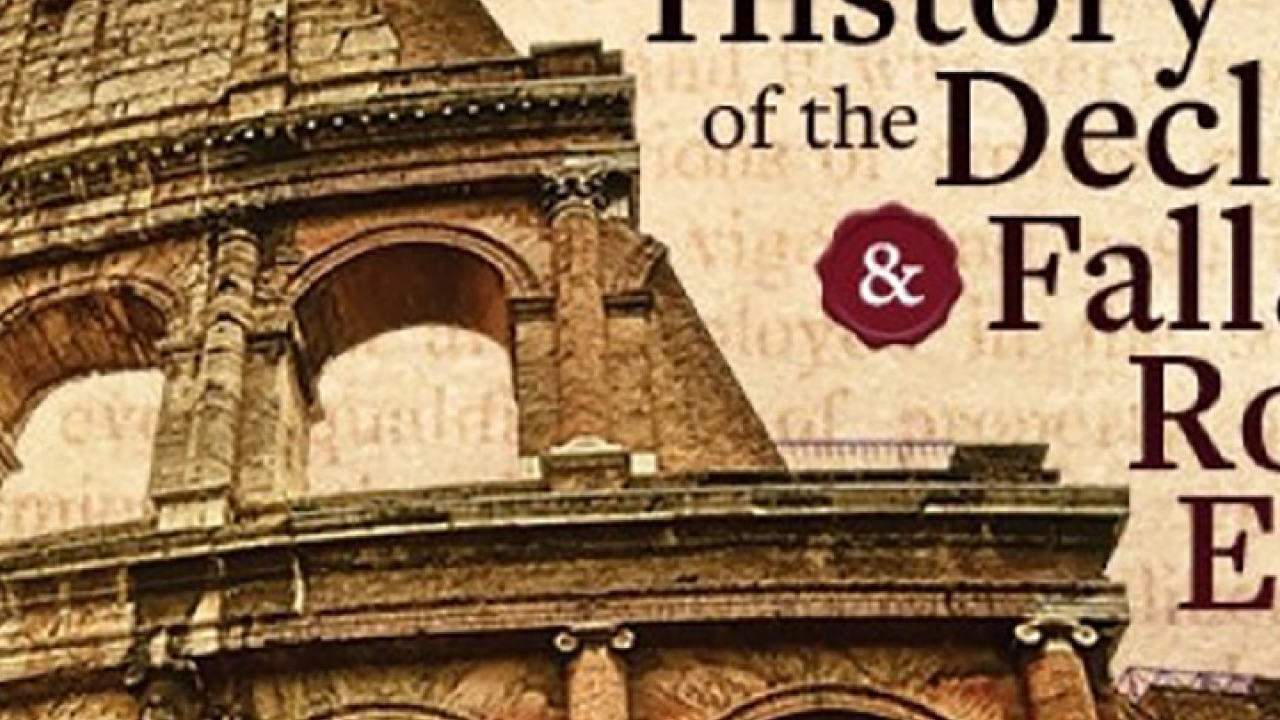
Books that Matter: The History of the Decline and Fall of the Roman Empire Season 1 Episode 3 The Empire at Its Beginning
- 30 min
In this riveting episode of Books that Matter, titled The Empire at Its Beginning, viewers are invited to embark on a compelling exploration of the early days of the Roman Empire, a period brimming with ambition, intrigue, and the consolidation of power. This episode delves into the narratives and events that shaped Rome from its humble beginnings as a small settlement to its ascent as a formidable empire that would influence the course of western civilization.
The episode opens with an evocative depiction of ancient Rome, setting the backdrop for a narrative that is rich with cultural and political dynamics. Through a combination of vivid historical reenactments, expert interviews, and engaging visual storytelling, viewers are transported to a time when Rome was a burgeoning republic on the cusp of transformation. The show's hosts articulate the complex social fabric of early Roman society, examining the intersection of nobility and common citizens as they navigated the challenges of governance, warfare, and expansion.
Central to this episode is the examination of key figures who played pivotal roles in the Republic's early governance. Viewers will gain insights into the lives of legendary leaders such as Romulus, the mythical founder of Rome, and early consuls who set precedents for future Roman governance. The narrative presents a nuanced understanding of their contributions and the philosophical ideals that underpin their leadership. Complementing these portrayals are discussions about the religious and mythological beliefs that influenced the political ethos, thus enriching the viewer's comprehension of how these early visions laid the groundwork for future imperial ambitions.
A significant focus of this episode is the military innovations and strategic conquests that characterized Rome's early expansion. Through expert commentary, the program illuminates the roles of the Roman legions, detailing the evolution of military strategy that would ultimately allow Rome to dominate the Mediterranean region. The program carefully balances discussions on warfare with the intricate relationships forged by diplomacy, trade, and alliances, showcasing Rome's tactical genius in navigating both conflict and cooperation in its ambitions.
Furthermore, The Empire at Its Beginning emphasizes the importance of law and governance in shaping the Roman identity. The Pact of the Twelve Tables emerges as a critical point of discussion, highlighting how legal codes crafted in these formative years established principles that would endure for centuries. Viewers will appreciate how this early legislative framework served as a testament to Roman values of justice and citizenship, facilitating a sense of unity among a diverse populace.
As the episode unfolds, attention shifts to the social dynamics of early Rome, examining the complex interplay between different classes, including patricians and plebeians. The struggle for power within these classes is vividly depicted, showcasing the growing discontent among the lower classes and the eventual push for reforms. Through interviews with historians, the show captures the essence of class struggle, painting a picture of a society grappling with issues of inequality, representation, and social justice that resonated throughout Roman history.
Another compelling aspect of this episode is its exploration of the role of women in early Roman society. Though often relegated to the background in traditional historical narratives, the show highlights specific women who wielded influence and power, challenging the conventional perceptions of femininity and agency in a male-dominated society. Through their stories, the episode fosters a more inclusive understanding of Roman culture, inviting viewers to consider the contributions of women in shaping the early empire.
The episode is punctuated by moments of reflection, encouraging viewers to contemplate the broader implications of Rome’s early achievements and failures. As the narrative progresses, it poses thought-provoking questions about the sustainability of power and governance, providing historical context that resonates with contemporary political themes. It serves not only as a historical recounting but also as a lens through which modern audiences can reflect on the complexities of leadership and community.
Throughout The Empire at Its Beginning, the lush visuals, engaging narrative style, and rich expert commentary converge to create a dynamic viewing experience. Each segment of the episode artfully stitches together the multifaceted threads of early Roman history, making it accessible and engaging for viewers from all backgrounds.
Ultimately, this episode of Books that Matter not only enriches the audience's understanding of a pivotal chapter in ancient history but also ignites intrigue for the episodes to follow. By laying the groundwork for Rome’s eventual rise to greatness, it sparks a dialogue about the enduring legacy of this empire and its profound impact on the world as we know it today. The Empire at Its Beginning is a thoughtful exploration of the foundation of one of history's most influential civilizations, ensuring that the story of Rome continues to captivate and inspire new generations of thinkers and learners.
