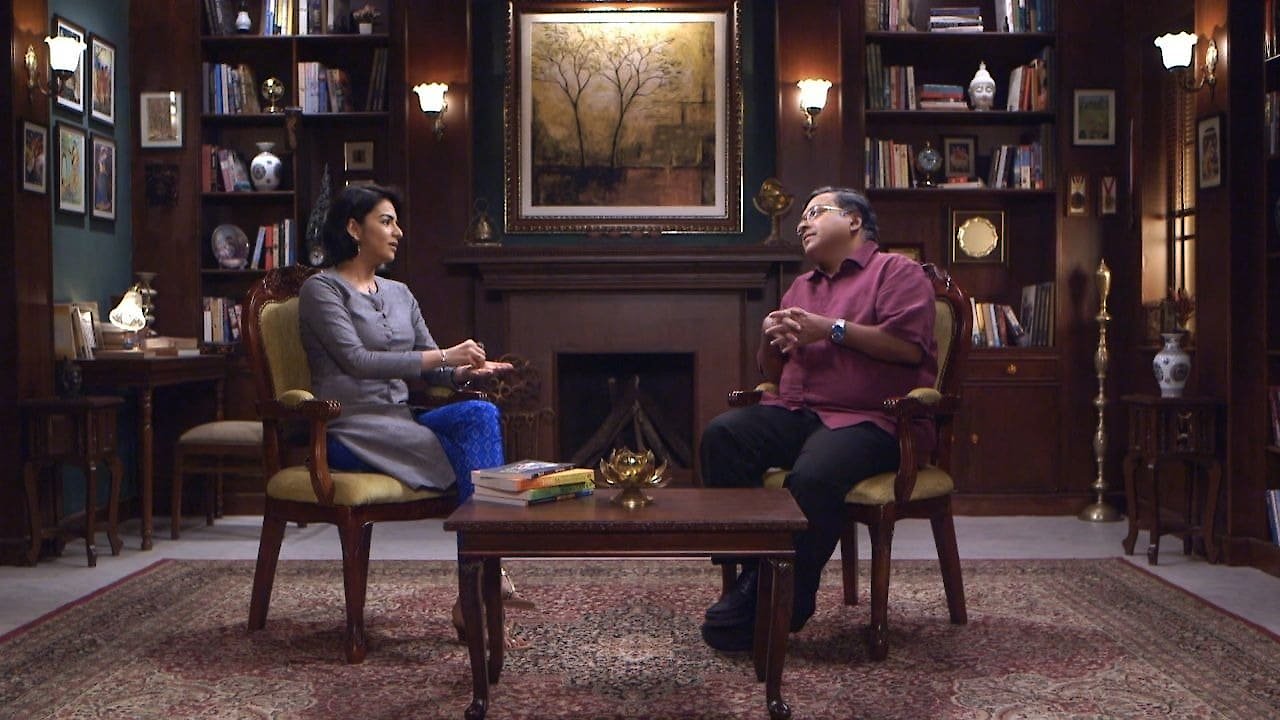
Devlok with Devdutt Pattanaik Season 1 Episode 2 Astik-Nastik
Devlok with Devdutt Pattanaik is an Indian television show where Hindu mythologist Devdutt Pattanaik, through the prism of mythology, decodes various aspects of culture and society, ranging from politics to philosophy. In season 1 episode 2, the theme is Astik-Nastik.
The episode starts with Devdutt Pattanaik explaining the difference between Astik, who believes in the existence of God, and Nastik, who doesn't believe in God. He then takes us on a journey to different schools of philosophy, where concepts like Dharma, Karma, Maya, and Moksha are discussed.
Devdutt starts with the Carvaka school of philosophy, which believes that there is no God, no soul, and no afterlife. They believe that the world is made of four basic elements - earth, air, water, and fire, and only these exist. The Carvakas believe that happiness can only be achieved through materialistic pleasures and that there is no reward or punishment for deeds done in life. They argue that what is seen is real, and what is unseen is not.
Next, Devdutt talks about the Sankhya school, which believes in the duality of soul and matter. The Sankhyas believe that the soul is pure and immortal, unlike the matter, which is impure and perishable. The soul is the knower, and the matter is the known. They believe that the soul is trapped in the material world due to ignorance and that the ultimate goal of life is to attain liberation from the material existence.
Then, Devdutt discusses the Mimamsa school, which focuses on the Vedic scriptures and rituals. The Mimamsakas believe that the ultimate goal of life is to attain heaven through performing sacrifices and rituals. They believe that the Vedas are eternal, and one should follow them to attain a good life here and in the afterlife.
Devdutt also talks about the Vedanta school, which is the most popular and widely accepted school of philosophy in India. Vedanta means the end of the Vedas, and it focuses on Upanishads, which deal with the ultimate truth of life. The Vedantists believe in the ultimate reality, Brahman, which is the source of all existence. They believe that the ultimate goal of life is to attain liberation from the cycle of birth and death and merge with Brahman.
In the second half of the episode, Devdutt brings in the story of Astika and Nastika. Astika was a young boy who was the son of a sage, and he believed in the existence of God. Nastika was a young girl who was an atheist and didn't believe in God. The two were arguing over the existence of God, and Astika managed to convince Nastika of God's existence by narrating a story.
The story was about a king who had a vast empire and was proud of his power. One day, he asked his courtiers who was the most powerful being in the world. The courtiers replied that it was the king himself. But the king was not satisfied. He then asked who was more powerful than him. The courtiers replied that it was the ministers. Again, the king was not satisfied and kept on asking the same question, and the courtiers kept on giving different answers. Finally, they said that the most powerful being in the world was God. The king was satisfied and realized that even he had a limit to his power.
After hearing this story, Nastika accepted the existence of God, and Astika won the argument. Devdutt explains that the story teaches us that there is a limit to human knowledge and power, and one should not be arrogant about it. God is the ultimate power in the universe, and we should always be humble and grateful for it.
In conclusion, the episode Astik-Nastik explores different schools of philosophy and their beliefs regarding the existence of God. Devdutt Pattanaik skillfully links the philosophical concepts to real-life situations and narrates an engaging story to bring his point home. The episode is a must-watch for anyone who wants to understand Indian philosophy and its impact on culture and society.
