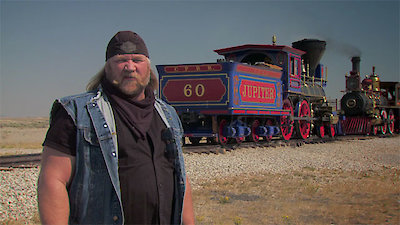
American Ride Season 4 Episode 2 Rails, Trails and Boomtowns
- April 8, 2013
Rails, Trails and Boomtowns is the second episode of the fourth season of the popular historical documentary series American Ride. In this episode, the host and historian Stan Ellsworth takes us on a fascinating journey through the American West, exploring the impact of the expansion of railroads and trails on the rapid and chaotic growth of boomtowns during the 19th century.
The episode begins with Stan introducing us to the concept of the "Wild West," a popular image in American culture that was a product of the rapid expansion of the West during and after the Civil War. We see how the opening of the Transcontinental Railroad in 1869 connected the East and West coasts of the country for the first time, and how this led to a huge increase in the number of wagon trails, stagecoach lines, and cattle drives crisscrossing the country.
As we travel through the West with Stan, we learn about the different types of trails that were used to transport people and goods across the country. We see the Oregon Trail, which was used by pioneers heading west to settle in new territories, and the Santa Fe Trail, which connected the Midwest with Mexico and was primarily used for trade.
Next, we learn about the rise of boomtowns, which were communities that sprang up almost overnight in response to the sudden availability of resources like gold or silver. Stan takes us to Virginia City, Nevada, to show us the lasting impact of the Comstock Lode, a massive silver deposit that was discovered in the area in the 1850s. We see how Virginia City grew from a small camp to a bustling city almost overnight, and how the influx of people and resources led to both wealth and chaos.
Throughout the episode, Stan emphasizes the role of the railroads in the expansion of the West. We see how railroads opened up new territories for settlement and made it easier to transport goods and people across long distances. We also see how railroads often determined where boomtowns would grow, as towns would spring up around the newly built tracks in order to take advantage of the economic opportunities.
One of the most interesting aspects of the episode is Stan's exploration of the cultural impact of the West's expansion. We see how different groups of people, including immigrants, women, and Native Americans, contributed to the development of the West in unique ways. We learn about the Chinese workers who were instrumental in building the railroads, the role of women in frontier communities, and the complex and often tragic relationship between Native Americans and settlers.
Overall, Rails, Trails and Boomtowns is a fascinating look at one of the most tumultuous and transformative periods in American history. Stan Ellsworth's engaging storytelling and deep historical knowledge make this episode a must-see for anyone interested in the history of the American West.
