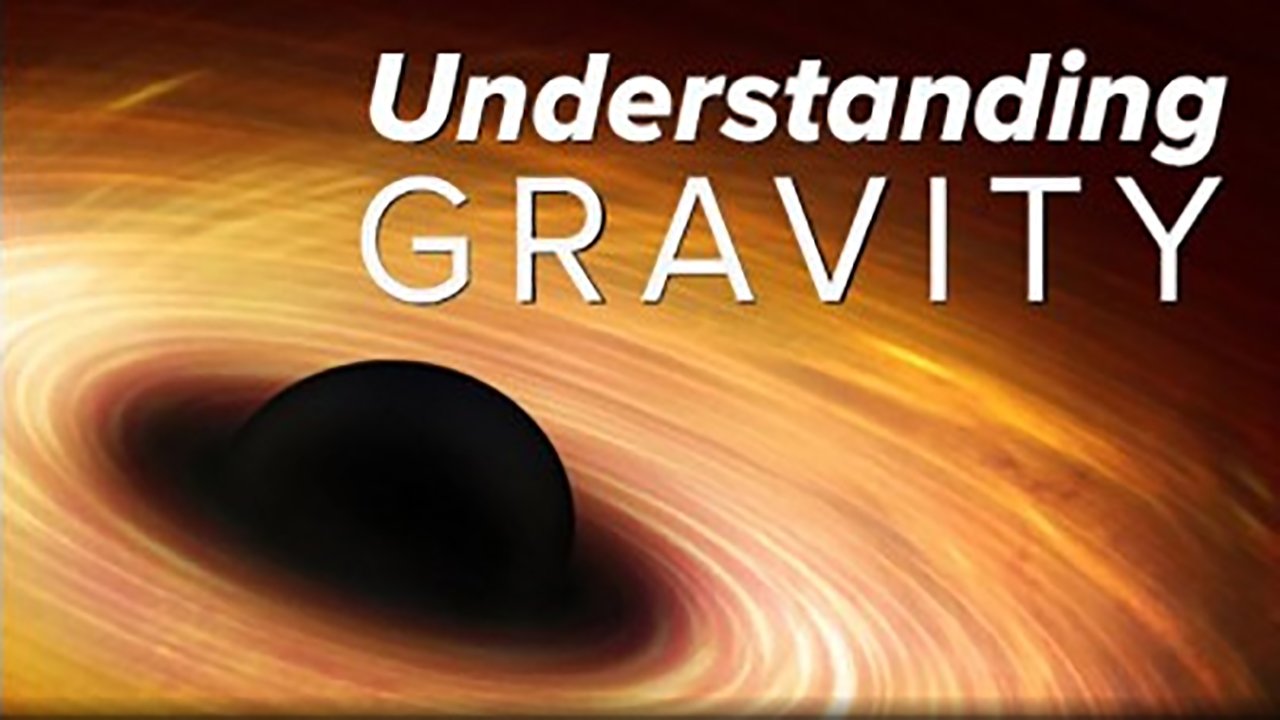
Black Holes, Tides, and Curved Spacetime: Understanding Gravity Season 1 Episode 7 Stars in Their Courses--Orbital Mechanics
- TV-PG
- August 30, 2013
- 29 min
In the seventh episode of Black Holes, Tides, and Curved Spacetime: Understanding Gravity, titled Stars in Their Courses--Orbital Mechanics, viewers embark on an enlightening journey through the intricate and awe-inspiring world of orbital mechanics, a cornerstone of celestial dynamics that governs the interactions and motions of celestial bodies in the vast expanse of the universe.
The episode opens with a breathtaking visual montage of celestial bodies in motion, from the graceful arcs of planets circling their stars to the mesmerizing dance of binary star systems. This sets the stage for an exploration of the fundamental principles that dictate how objects move in space, driven by the mysterious force of gravity. Here, gravity is not merely a force but a fabric of spacetime that bends and curves, shaping the very orbits of planets, moons, and even entire galaxies.
As the hosts guide the audience through the foundational concepts of orbital mechanics, viewers are introduced to the essential laws of motion first established by the legendary Isaac Newton. The episode delves into Newton's law of universal gravitation, explaining how every mass exerts an attractive force on every other mass, and how this principle laid the groundwork for understanding the orbits we observe today. Newton's groundbreaking equations come to life through stunning simulations and graphic illustrations that make even the most complex equations accessible to all.
The narrative seamlessly transitions into discussing Kepler's laws of planetary motion, which elaborate on how planetary orbits are not circular but elliptical. Viewers learn about the significance of the semi-major axis and the eccentricity of an orbit, which determine the shape and size of an orbiting body’s path around a star. Through visualizations, the episode showcases how gravitational fields influence these paths, emphasizing the interplay between velocity and gravitational forces, and how these relationships govern the motion of planets and other celestial entities.
Amidst the mathematical elegance of orbital mechanics, the episode brings to light the real-world applications of these principles. Space missions, such as those undertaken by NASA and other space agencies, rely heavily on the nuanced understanding of orbital mechanics for successful launches, landings, and rendezvous in space. The hosts highlight landmark achievements in space exploration, illustrating how scientists and engineers have utilized these principles to navigate spacecraft through the intricate web of gravitational fields and orbital paths. Viewers are offered insights into how trajectories are calculated and adjusted, the role of slingshot maneuvers to gain speed, and the meticulous planning that goes into each mission.
In an engaging segment, the episode covers the topic of tidal forces, a fascinating consequence of the gravitational interaction between celestial bodies. This leads to a discussion on the effect of gravity not only on the space bodies themselves but also on their environments. For instance, viewers will discover how the gravitational pull of the moon affects the tides on Earth, shaping coastlines and ecosystems. This part of the episode illustrates the broader implications of gravitational mechanics on life here and beyond.
As the episode progresses, the discussion deepens into more complex topics such as the concept of stability in orbital interactions. The hosts present a variety of scenarios, from simple two-body systems to chaotic multi-body configurations. Through animations, audiences witness how gravity can stabilize shared orbits or lead to dramatic interactions, shedding light on the delicate balance necessary to maintain order in the cosmos. The episode emphasizes how understanding these dynamics is crucial for predicting the future movements of celestial bodies and for understanding potentially catastrophic events, such as asteroid impacts or the fate of spacecraft.
Additionally, the episode captures the human element of science, featuring interviews with leading astrophysicists and astronomers who share their personal insights and experiences with orbital mechanics. These expert anecdotes provide an intimate look into the individuals who dedicate their lives to studying the cosmos, revealing their passion and the joy that comes from deciphering the complexities of space.
As Stars in Their Courses--Orbital Mechanics culminates, it leaves viewers invigorated with fascination for the cosmic ballet happening all around them. The episode not only clarifies the core principles of orbital mechanics but also amplifies appreciation for the profound elegance that governs the universe. In its signature blend of scientific rigor and imaginative storytelling, the episode reminds us that the stories written in the stars are dictated by the very laws of nature that shape our existence on Earth.
Overall, this episode promises to not only educate but captivate with the intricate interplay of forces that give rise to the beautiful and dynamic movements of the universe, urging viewers to look up at the night sky with newfound wonder and curiosity.
