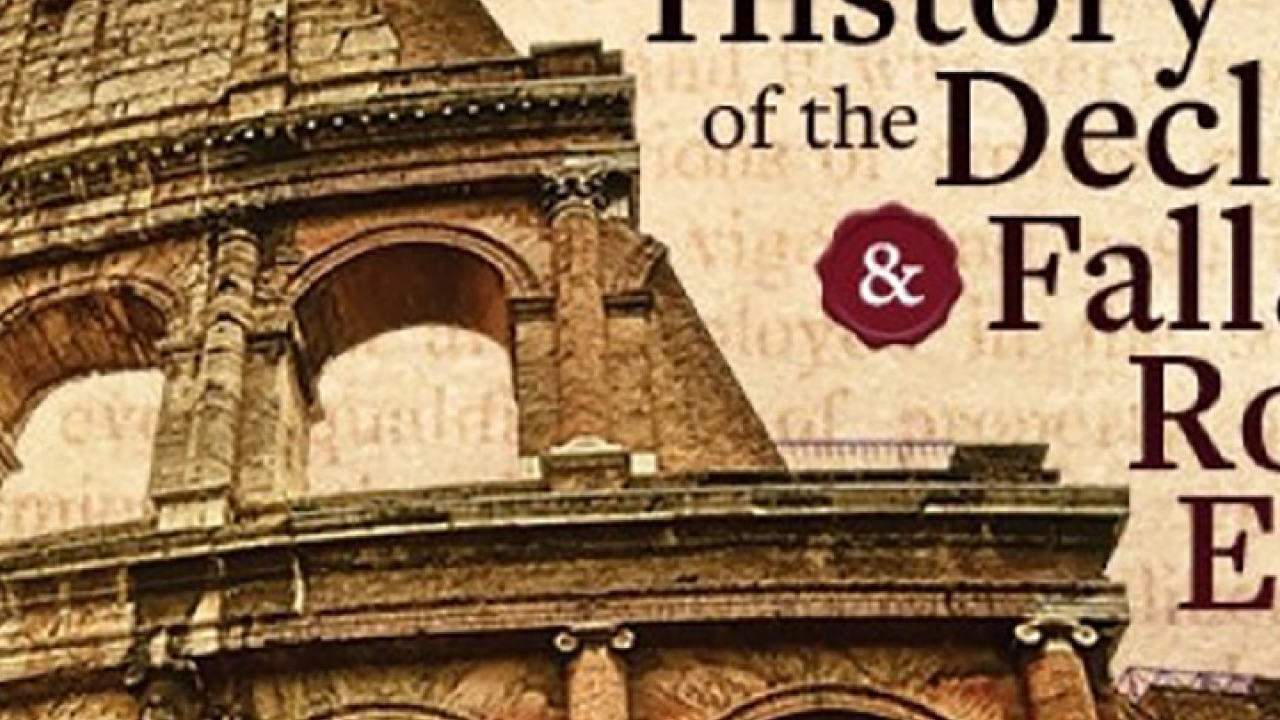
Books that Matter: The History of the Decline and Fall of the Roman Empire Season 1 Episode 17 The Byzantine Empire and Charlemagne
- 29 min
In this captivating episode of Books that Matter, we delve into the intricate historical relationship between the Byzantine Empire and Charlemagne, one of the most significant figures in medieval history. This exploration invites viewers to contemplate the enduring legacy of the Roman Empire as it transformed into the Byzantine realm and how Charlemagne's reign intersected with and influenced this dynamic period.
As the episode unfolds, we are transported back to the eighth and ninth centuries, a time when the Western Roman Empire had fallen, yet its cultural, political, and religious influences remained profoundly felt. The Byzantine Empire, often quintessentially defined by its capital, Constantinople, became a bastion of Roman law, administrative sophistication, and Christian scholarship. The episode highlights how the Byzantines inherited the profound traditions of Roman governance while also adapting to the evolving dynamics of a post-Roman world.
Viewers will be introduced to the figure of Charlemagne, who, through a series of military conquests and strategic alliances, emerged as the King of the Franks and later crowned Emperor of the Romans by Pope Leo III in 800 AD. His reign heralded the Carolingian Renaissance, a period characterized by a revival of arts and learning, which was largely influenced by the texts and traditions of the ancient Romans and the burgeoning Byzantine culture. The episode intricately weaves the narrative threads connecting these two powerful entities, highlighting the ideological and diplomatic relations that shaped their historical trajectories.
Throughout the episode, expert historians and scholars provide insights into the ways in which Charlemagne viewed himself as a successor to the Roman Empire and how he attempted to restore the glory akin to that of his Roman predecessors. At the same time, we see how the Byzantine court observed Charlemagne’s ascent with a mix of admiration and wariness. The Byzantines, who had cultivated their identity over centuries, positioned themselves as the true bearers of Roman heritage, all while grappling with the challenges posed by Charlemagne’s burgeoning empire.
The episode pays particular attention to the cultural exchange between the Byzantine Empire and Charlemagne's realm. As emissaries and scholars moved between Constantinople and the Frankish court, ideas, art, and religious practices traversed these cultural spheres, enriching both societies. We'll learn about the impact of Byzantine theology, art, and administration on Charlemagne's reign and how these influences fostered greater understanding and collaboration, even amidst the tensions of competing claims to legitimacy and authority.
A crucial part of this episode is the exploration of the iconoclast controversy — a significant theological dispute in the Byzantine Empire during this era. This schism, which revolved around the use of religious images, not only posed questions of faith but also had profound political implications that resonated in Charlemagne’s kingdom. The episode discusses how these conflicts contributed to a broader dialogue on religion and governance, ultimately enriching the discourse on power and piety in both empires.
Additionally, the episode highlights the intersection of military strategy and diplomacy as both realms navigated their ambitions. Viewers will witness the shifting alliances and the occasional hostilities that defined their interactions, emphasizing how these relationships were not merely adversarial but were also marked by moments of cooperation and mutual respect. It paints a vivid picture of a world where battles for power were often paralleled by efforts to forge peace and understanding.
In rounding out the discussion, the episode carefully considers the legacies left by both the Byzantine Empire and Charlemagne. Charlemagne’s reign laid the groundwork for what would become medieval Europe, establishing cultural and political frameworks that would last for centuries. Meanwhile, the Byzantine Empire continued to thrive, evolving through its challenges and maintaining a crucial link to the ancient world.
As we close this episode, viewers are left with poignant reflections on how these historical narratives still resonate within Western civilization today, igniting discussions on leadership, cultural identity, and the preservation of knowledge. The intricate relationship shared by the Byzantine Empire and Charlemagne is not just a story of conquest and rivalry; it is a tale of resilience, adaptation, and the enduring quest for identity within the ever-changing tides of history.
Join us for an enlightening exploration of this remarkable chapter in history, where the threads of empire, faith, and intellect intertwine in ways that continue to shape our understanding of the past and present.
