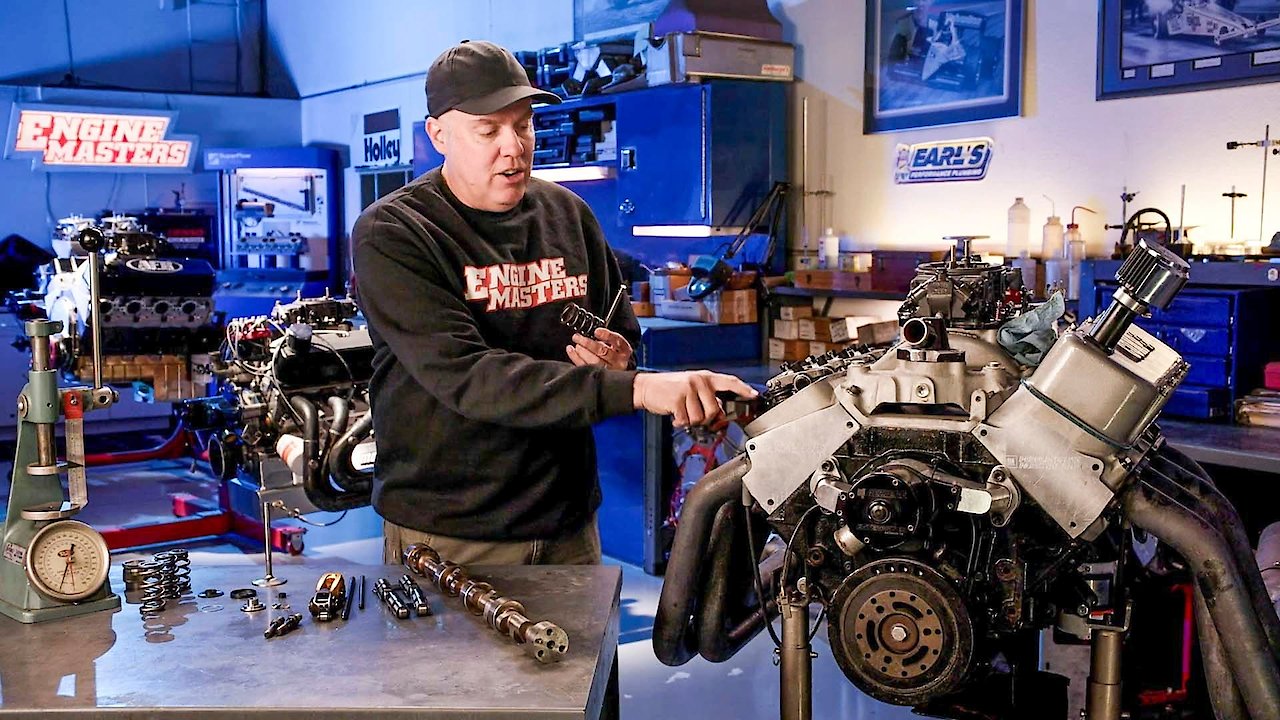
Engine Masters Season 1 Episode 1 Dyno Proven: 50 HP With One Bolt-On! Engine Masters Ep. 1
- TV-G
- July 8, 2016
- 11 min
As car enthusiasts and engine builders alike know, horsepower is king. The more horsepower your engine produces, the faster and more thrilling your ride can be. But achieving significant power gains typically requires extensive modifications and tuning. In the first episode of Engine Masters, the team sets out to prove that even small changes can make a big difference in horsepower.
The episode begins with hosts Steve Dulcich and David Freiburger introducing the show and outlining their goals for the season: to test and evaluate various performance modifications and share their results with viewers. They also introduce the team of expert engine builders and technicians who will be working on the show, including dyno operator Steve Brulé and engine builder Richard Holdener.
The first test of the episode is a baseline run with a 454 big block Chevy engine. The engine produces a respectable 450 horsepower and 540 lb-ft of torque, but the team wants to see if they can push it even further with just one bolt-on part. That part is a high-flow intake manifold from Holley, which promises to increase airflow and deliver gains of up to 50 horsepower.
Before installing the new manifold, the team runs several tests to establish a baseline for comparison. They test the engine's stock manifold and carburetor, as well as a few aftermarket manifold and carburetor combinations. These tests reveal that the stock manifold and carburetor are restricting airflow and robbing the engine of potential power.
Next, the team installs the Holley manifold and retunes the carburetor to take advantage of the increased airflow. After several dyno runs, they're astounded to see that the engine produces an additional 52 horsepower and 42 lb-ft of torque. Essentially, the new manifold and carburetor combination unlocks the engine's full potential and delivers impressive power gains.
The hosts and team members are excited by these results, but they're not content to end the episode there. They want to see if there's any more power to be had by tweaking the engine's ignition timing and testing different fuels. These tests reveal that advancing the timing adds a few more horsepower, but using higher-octane fuel doesn't make any significant difference.
Overall, the first episode of Engine Masters sets the tone for the season by showcasing the team's expertise, attention to detail, and commitment to testing and evaluation. It also demonstrates that even small modifications can make a big difference in engine performance, and inspires viewers to apply these lessons to their own engine builds. Whether you're a seasoned pro or a budding engine enthusiast, there's something to learn from Engine Masters.
