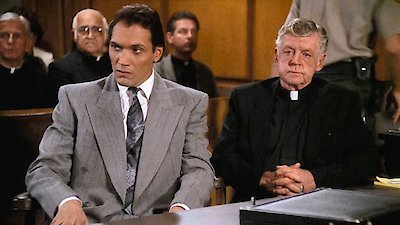
L.A. Law Season 4 Episode 20 Forgive Me Father, for I Have Sued
- TVPG
- May 3, 1990
- 47 min
-
(31)
Forgive Me Father, for I Have Sued, the compelling 20th episode of Season 4 of L.A. Law, dives deep into the moral dilemmas faced by the legal professionals at McKenzie Brackman, as they navigate the tumultuous intersection of faith, forgiveness, and the intricacies of the law.
The episode opens with the staff at the prestigious law firm gearing up for a high-profile case that revolves around a local priest, Father Dominic, who finds himself in a precarious position after a member of his congregation files a lawsuit against him. The allegations are of a sensitive nature, touching on both personal and spiritual boundaries that challenge the very essence of morality and justice. As details unfold, the firm must grapple with questions that merge legal obligation with ethical considerations, pushing each character to confront their own beliefs about justice, redemption, and the role of faith in a litigious society.
As character developments unfold, we see the diverse legal team at McKenzie Brackman become a microcosm of larger societal debates. Each attorney reacts differently to the case: some are overtly sympathetic to the priest, whose deep dedication to his congregation has made him a beloved figure, while others view the claims with a critical eye, believing the truth shall prevail regardless of personal feelings toward Father Dominic.
One of the lead attorneys, the sharp-witted and passionate Ann Kelsey, finds herself particularly invested in the case. Her own background and beliefs are put to the test as she argues for Father Dominic’s character while questioning whether the pursuit of the truth could lead to an unjust outcome. Ann showcases the show's signature combination of wit and emotional depth as she balances her responsibilities in the courtroom with personal reflections on her own faith and values.
Meanwhile, her partner, the pragmatic and often sardonic Arnie Becker, provides a counterpoint to Ann's idealism. Arnie’s legal strategy is to dissect the plaintiff's claims, treating the case as a standard legal battle rather than a spiritual quandary. His approach highlights the sometimes-dissonant relationship between law and morality, forcing the audience to examine the implications of each character’s stance.
As the episode progresses, flashbacks reveal Father Dominic’s journey, from a young idealistic clergyman to the conflicted man he is today. These glimpses into his past add layers to the narrative, allowing viewers to understand the factors that shaped his life choices and which now influence the current lawsuit. This deeper exploration of character engages the audience with themes of regret, sin, and the human capacity for redemption—a hallmark of in L.A. Law’s storytelling.
The episode is not merely a courtroom drama; it also serves as a reflection of the characters' personal lives. Each member of the legal team faces their own struggles in grappling with their histories and choices. Through riveting conversations and moments of introspection, the series deftly explores how the law intersects with personal values, and how each attorney's experiences shape their perspectives on the case.
As tensions mount, the courtroom transforms into a battleground where faith and law clash. Witness testimonies are heart-wrenching, illustrating the profound impact of the priest on his community, while also raising questions about liability and accountability. The courtroom scenes are both gripping and thought-provoking, challenging viewers to contemplate the balance between justice and forgiveness.
The episode also features poignant interactions with supporting characters, including the thoughtful and principled partner, Danny Eberhardt, who provides moral clarity amid the chaos, and Rosalind Shays, whose strategic mind adds depth to the prosecution’s case. Each character not only contributes to the narrative but also reinforces the overarching themes of duality in faith and the law’s capacity to address or exacerbate human suffering.
As the case reaches its climax, tensions rise, morality wavers, and the boundaries between right and wrong become increasingly blurred. Viewers are briskly ushered through a series of emotional high-stakes moments, with ethical implications lingering long after the final verdict.
In Forgive Me Father, for I Have Sued, L.A. Law continues its legacy of engaging storytelling, rich character development, and thought-provoking societal commentary. While delivering an entertaining legal drama, the episode also invites viewers to ponder their own beliefs and the intricacies of justice, morality, and forgiveness, making it a memorable installment in a series praised for addressing complex themes.
