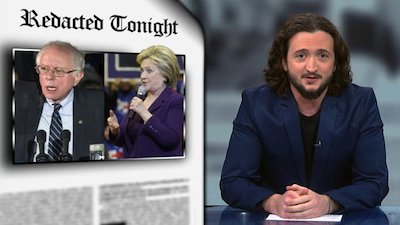
Redacted Tonight Season 2 Episode 22 TPP Signed, Nestle Admits Slavery and Bernie Momentum
- Not Rated
- February 5, 2016
- 1560 min
Redacted Tonight is a political satire show that takes a critical look at the world's largest corporations and the government agencies that regulate them. In season 2 episode 22, titled "TPP Signed, Nestle Admits Slavery and Bernie Momentum," the hosts cover a wide range of topics from the Trans-Pacific Partnership (TPP) trade deal to corporate responsibility.
The episode starts with the breaking news that the TPP has been signed by the United States and 11 other Pacific Rim countries. The hosts explain how the TPP will benefit corporations, but not necessarily workers or consumers. They also point out how the secrecy surrounding the negotiations allowed corporations to influence the deal in their favor, while blocking any public debate or input.
Next, the hosts discuss the recent news that Nestle, one of the largest food and beverage companies in the world, has admitted to using slave labor in its supply chain. They explain how Nestle's admission is a sign of a larger problem in the food and beverage industry and how consumers can make a difference by demanding better labor practices from the companies they buy from.
The episode then turns to the 2016 Democratic presidential primaries and the momentum behind Senator Bernie Sanders' campaign. The hosts discuss how Sanders' message of economic inequality and political corruption is resonating with voters, especially among younger generations. They also talk about how the media is ignoring Sanders' campaign and how that reflects the larger issue of media consolidation and corporate control over the news.
Finally, the hosts take a look at the role of money in politics, specifically the political activities of the Koch brothers and Monsanto. They explain how these two corporations are using their immense wealth to influence elections and policy in their favor. They also discuss how the recent Citizens United Supreme Court decision has made it easier for corporations to spend unlimited amounts on political campaigns, effectively drowning out the voices of individual voters.
Overall, the episode provides a critical, yet humorous, take on the intersection of corporate power and government policy. Through their satire and analysis, the hosts encourage viewers to think critically about the issues at hand and to take action in their own lives to create positive change.