Independent Lens Season 9 Episode 19 King Corn
- April 15, 2008
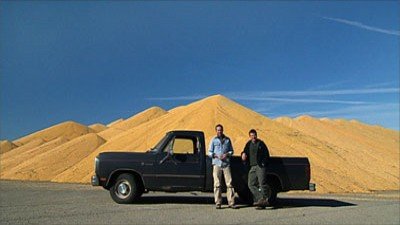
In the 19th episode of the 9th season of Independent Lens, titled "King Corn," the audience is taken on a journey with two friends, Ian Cheney and Curt Ellis, as they decide to go back to the heartland of America to learn about the country's, and particularly Iowa's, strong connection to corn and the food that it dominates. They both have personal connections to the Midwest, but what they discover is something they never could have expected.
Cheney and Ellis begin their journey by renting an acre of land in Iowa and growing an acre of corn. They soon learn that this is not just any corn, but is genetically modified to form an industrial monoculture that can be used for animal feed, high fructose corn syrup, and ethanol. This corn is not suitable for human consumption, so they decide to track the corn that is suitable for human consumption, which takes them on a trip of a lifetime.
The duo's journey takes them on a tour of the Midwest's corn system, including visits to an ethanol plant and a cattle feed lot. Along the way, they encounter farmers, scientists, and industry workers who share their knowledge and experiences regarding the food industry. They discover that the Midwest has become a center for industrial farming and massive food corporations that have developed a system of overproduction of corn, which is used for anything from fuel to feed to the human diet, despite being extremely unhealthy.
Their investigation takes Cheney and Ellis to Washington D.C., where they meet with some of the policymakers responsible for crafting this food system legislation. In the end, they find it astonishing that out of more than 10,000 products at a grocery store, almost all are made with the same core ingredient - corn. The food industry, along with its government supporters, has employed corn in a variety of forms, from powdered soy fat, to high fructose corn syrup, to non-biodegradable packing materials, and even to the fuel tank.
As the friends continue their quest, they find that businesses in the food industry are controlling the food market and that farmers are becoming more and more dependent on genetically modified corn to grow their crops. This system has forced farmers to purchase rates that have created a sea of debt and the subsequent release of smaller farmers from farming. Sadly, this brings up a question: who has created this way of dependency? The answer is big corporations, by making it almost impossible for smaller farms to compete, resulting in farmers being forced to rely solely on the corn industry.
"King Corn" presents viewers with a profound view of how the food industry operates and how its operations are created with a narrow focus on profit maximization. The topic is becoming more relevant, especially with the rise of obesity and industrial farming, and how a diet of unhealthy food is becoming more relevant. The production of this corn is also contributing to the global climate, by accelerating the climate change, as the corn industry has raped native prairies and filled them with pesticides, herbicides, and other toxic chemicals. The program offers a comprehensive view of how the food industry affects consumers, farmers, and the environment and how we can do our part in making the food system healthier and more sustainable.
In conclusion, "King Corn" is one of the must-watch episodes for viewers who are interested in learning more about the country's food system, and in particular, the corn industry. The episode makes one think about how our food choices are not only influenced by our decisions but also by a food industry whose decisions are highly influenced by policy, economics, and corporate power. Viewers will also learn more about the prospects of healthier food on the market and steps they can take to improve their eating habits. It's an eye-opening and sobering documentary that encourages us all to consider what we are putting into our bodies and how it affects not only our health but also the health of our planet.