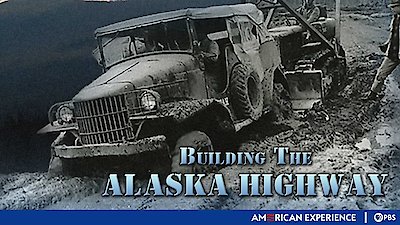
American Experience Season 17 Episode 4 Building the Alaskan Highway
- February 7, 2005
During World War II, the United States faced a strategic dilemma with Japan possessing a strong presence in the Pacific Northwest, particularly in the Aleutian Islands. Alaska was seen as an important defense bulwark, but there was no land-based transportation to the territory, which left American soldiers vulnerable and without the capacity to defeat enemy troops. Thus, President Roosevelt called for the creation of the Alaskan Highway, a 1,500-mile road that would connect Canada to Alaska, on January 28, 1942.
"Building the Alaskan Highway," an episode of American Experience's 17th season, examines the immense undertaking of constructing the highway, which would take only eight months to complete. The show primarily chronicles the experiences of the African American troops of the army's segregated engineering corps, who were brought north to work on the impossible task of creating a road through the harshest terrain on the planet.
Through primary source footage and interviews with surviving reminiscences, "Building the Alaskan Highway" recreates the hardships and triumphs of the road project, such as the laborers' isolation, the frigid temperatures, and the challenges of digging through miles of permafrost. The episode also chronicles the daily struggles of African American soldiers to deal with racism and segregation from their white counterparts, as they bravely worked to build the highway in a new and unfamiliar terrain.
The journey to build the Alaskan Highway began in earnest only after the US Army Corps of Engineers mustered an army of laborers that could survive the harsh conditions and bear down through extreme weather. The first wave of workers had Asian soldiers from the Chinese and Filipino U.S. divisions, but the conditions and mistreatment they endured were intolerable, and many succumbed to illness. In desperation, the government called in the African American division to replace them.
The African American troops assigned to build the Alaskan Highway were treated with the same injustice and discrimination they would face in many parts of America. Nevertheless, they threw themselves into their new task with grit and determination, putting in long hours, inhaling dust and smoke from the fires that kept them warm, fighting to stay alive in this new and unfamiliar land. Snow came down by the inches and feet, often causing days of work to be undone almost immediately by the harsh natural conditions.
The show extensively covers the makeshift, trench-like bunk beds by the soldiers' temporary barracks, and how earlier laborers would burn dirt and leaves as fuel, which created significant respiratory damage. As the project progressed amid such harsh environmental factors, the army was forced to undertake large-scale medical interventions to keep their soldiers healthy and alive, with varying degrees of success, but they persevered.
The episode also describes the innate human curiosities during such challenging times, particularly the interest shown in the indigenous people of the north and how they were integral to the U.S. army's success. The native Alaskans were treated with respect and often given access to new equipment that facilitated their traditional ways of life. The show showcases how such curiosity also spurred cultural and artistic exchange, particularly with singing and dance performances that bonded the African American soldiers and the native people and helped to keep them motivated through the long and often brutal workdays.
As the road continued to progress, the ethnic inequalities prevalent in the army became starker, particularly when advancing towards a Japenese-occupied Aleutian Island. This situation made evident the courage and determination of the African American engineers, despite a lack of recognition for their efforts. Finally, when the war ended on August 15, 1945, the Alaskan Highway officially opened up, with not merely transportation of troops but the building of military bases and civilian industries that followed and further developed the far north.
All in all, Building the Alaskan Highway is an inspiring episode that captures the feats of African-American soldiers and others who were instrumental in constructing a road that transformed North America's' terrain and furthermore propelled the country to the ideal of equality and justice. Through grit, determination, and a shared sense of curiosity, the soldiers and laborers built the impossible under horrific conditions, all the while providing an important insight into the forgotten struggles of those who trust more in their considerable talents than the color of their skin.