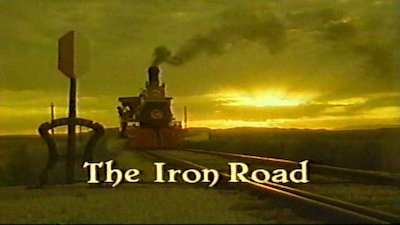
American Experience Season 3 Episode 5 The Iron Road
- November 26, 1990
The Iron Road is an episode from season 3 of the American Experience, a documentary series that airs on PBS. This particular episode focuses on the construction of the Transcontinental Railroad, which took place in the 19th century.
The episode begins by setting the scene for the time period in which the railroad was built. The Civil War had just ended, and the country was in a period of reconstruction and expansion. The federal government was eager to establish a transcontinental railroad in order to make travel and commerce more efficient between the East and West coasts of the United States.
Viewers are then introduced to the two main companies responsible for building the railroad: the Union Pacific and the Central Pacific. The Union Pacific was responsible for building from the East, while the Central Pacific was responsible for building from the West. The two companies were in fierce competition with each other, each trying to build as much of the railroad as quickly as possible in order to receive government subsidies.
The episode goes into detail about the challenges that workers faced during the construction of the railroad. The terrain was often treacherous, with mountains, deserts, and other natural obstacles to overcome. Workers also had to deal with extreme weather conditions, such as freezing temperatures in the mountains and scorching heat in the deserts. Disease was also a major problem, with many workers falling ill and dying from conditions such as cholera and smallpox.
Despite these challenges, workers persevered and the railroad gradually began to take shape. The episode details the various engineering feats that were required to build the railroad, such as blasting through mountains and constructing massive trestles. The Central Pacific even resorted to using explosives to create tunnels through the Sierra Nevada mountains.
One of the most interesting aspects of the episode is its focus on the workers who built the railroad. These workers came from all walks of life, including recent immigrants, former slaves, and even veterans of the Civil War. The episode explores the working conditions that these laborers faced, including long hours, low pay, and dangerous working conditions. It also highlights the role that Chinese workers played in the construction of the Central Pacific, with as many as 12,000 Chinese workers helping to build the railroad.
The episode also covers the political and economic implications of the construction of the railroad. The completion of the railroad had a profound impact on the United States, making travel and commerce faster and more efficient than ever before. It also helped to connect the country more closely, bringing together disparate regions into a more cohesive whole. The episode also touches on the negative consequences of the railroad, such as the displacement of Native American populations and the ecological impact of the construction.
Overall, The Iron Road is a fascinating look at one of the most important engineering projects in American history. It provides a comprehensive overview of the challenges and triumphs of the construction of the Transcontinental Railroad, as well as the social and economic impact that this project had on the United States. The episode is well-researched and engaging, and is sure to teach audiences a great deal about this important period in American history.