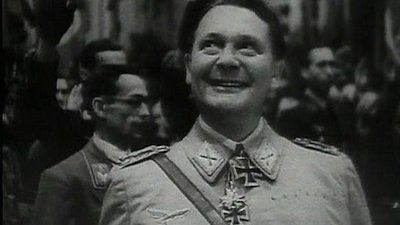
Hitler's Henchmen Season 1 Episode 4 The Marshall: Hermann Goring
- February 4, 2013
In the gripping fourth episode of Hitler's Henchmen, titled The Marshall: Hermann Göring, viewers are taken on a deep dive into the life and psyche of one of the most notorious figures of the Nazi regime. Hermann Göring, both a decorated World War I pilot and a prominent member of Hitler’s inner circle, emerges as a complex character whose ambitions and excesses played a crucial role in shaping the course of Nazi Germany.
The episode opens with a stark portrayal of Göring's early military career, showcasing his meteoric rise in the Luftwaffe, the German air force, which he would eventually lead as its commander. This scene sets the stage for understanding Göring's desire for recognition and his unyielding ambition—traits that would not only elevate him in the hierarchy of the Nazi party but also lead to his involvement in its more sinister activities.
As the narrative progresses, viewers are introduced to Göring's lavish lifestyle, which starkly contrasts with the grim realities of the time. With an insatiable appetite for wealth, power, and luxury, he amassed a fortune and became known for his extravagant tastes. The program highlights how this ostentation often masked a more sinister agenda, revealing how Göring used his position to enrich himself at the expense of the German people and those persecuted by the regime.
Interwoven with historical analysis are personal accounts and testimonies from historians and experts, elucidating Göring’s complex relationship with Hitler. The episode explores how, despite their differences, Göring was instrumental in implementing Hitler's policies, including the aggressive militarization of Germany and the establishment of concentration camps. His role as a key architect of the Nazi state is meticulously detailed, shedding light on how he orchestrated the plundering of art, wealth, and resources from across Europe, all while presenting himself as a hero to the German populace.
In The Marshall: Hermann Göring, the filmmakers delve into Göring’s involvement in the Nazi regime’s most heinous acts, including the Holocaust. The narrative reveals his deep-seated anti-Semitic beliefs and his pivotal role in the implementation of the "Final Solution." As the episode progresses, it becomes increasingly evident that Göring was not merely a passive participant in the atrocities committed by the Nazis; rather, he was an enthusiastic enabler and a strategic thinker who sought to expand Nazi influence and his own power.
The episode also examines Göring's psychological profile, offering insights into his motivations and insecurities. Interviews with psychologists and historians shed light on how his past experiences—shaped by both the trauma of World War I and his desire for personal glory—contributed to his actions during the Nazi era. As viewers are introduced to the darker aspects of his personality, they are left to grapple with the moral ambiguities that surround figures like Göring; was he a cunning mastermind or merely a product of a corrupt regime?
Adding to the episode's depth is the portrayal of Göring's infamous Luftwaffe victories and failures during World War II. It traces his diminishing influence within the Nazi hierarchy as military defeats began to accumulate, revealing how Göring's initial success eventually unraveled into a desperate bid for survival. As the war progresses, the episode captures Göring’s escalating paranoia and the lengths he would go to preserve his power, ultimately leading to clashes with other Nazi leaders and a precarious position within the regime.
The episode's production value is exceptional, employing archival footage, dramatic reenactments, and compelling narration to create a visceral experience. Viewers are transported to the era, witnessing the dramatic events that surrounded Göring's life, from grand military parades to clandestine meetings with Hitler and other high-ranking officials. The meticulous attention to detail enriches the storytelling, making it a captivating viewing experience.
As the episode draws to a close, it reflects on the lasting impact of Hermann Göring’s actions and decisions. His legacy, marked by infamy and moral failure, raises critical questions about complicity and accountability. The program encourages viewers to contemplate the broader implications of his choices within the tapestry of history, prompting a dialogue about the nature of evil and the capacity of individuals to commit atrocities in the name of ideology and ambition.
With its powerful storytelling and thorough exploration of Hermann Göring’s life and actions, The Marshall: Hermann Göring promises to leave a lasting impression on its audience. As one of Hitler's most prominent henchmen, Göring's story is a cautionary tale that sheds light on the dark pathways of power, ambition, and human morality during one of history's most tumultuous times.
