America: Facts vs. Fiction Season 3 Episode 8 Roads To Freedom
- TV-PG
- November 24, 2015
- 22 min
-
(8)
In season 3, episode 8 of America: Facts vs. Fiction, titled "Roads To Freedom", the show explores the role of transportation in the American Revolution and beyond. The episode delves into the myths and facts surrounding the roads and means of transportation that were vital for the success of military campaigns and the settling of the West.
The episode begins with the history of the American road network and its importance for the Continental Army during the Revolution. The show highlights how the British controlled the ports, so the only way the Americans could move troops and supplies was via the roads. Host Jamie Kaler debunks the myth that the American colonists had poorly maintained roads and horse-drawn carriages and reveals that they had developed a sophisticated transportation system that was crucial for the war effort.
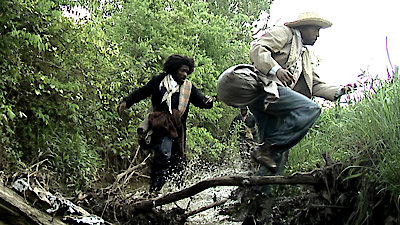
The Battle of Yorktown was an essential turning point in the American Revolution, and the show examines the myths and facts surrounding the roads that led to the battle. It dispels the notion that the American army surprised the British by taking a back route to Yorktown, revealing that the British knew of the American's movements and decided not to stop them. The episode explores how the Americans relied on a network of spies, including enslaved African Americans, to gather intelligence about the British army's movements.
The show moves on to the settling of the West and the creation of wagon trails, such as the Oregon Trail. Kaler debunks the myth that the pioneers who traveled West were rugged individuals who braved the wilderness on their own. Instead, the show reveals that the pioneers relied on well-worn trails, trading posts, and established communities to survive.
The segment on the Oregon Trail highlights the importance of transportation innovations, such as the Conestoga wagon, which had a unique design to help the pioneers traverse difficult terrain. The show uses animation to demonstrate the wagon's innovative features, such as the sloped sides to prevent tipping and the waterproof covering to keep the cargo dry.
The episode also explores the development of railroads and their impact on the American landscape. Contrary to popular belief, the show reveals that the first transcontinental railroad was not built by Chinese laborers but was actually a collaboration between Irish and Chinese immigrants, as well as other diverse groups.
The segment on railroads highlights the challenges faced by early railroad workers, including dangerous working conditions and low pay. However, the railroad also brought significant benefits, such as improved transportation, faster shipping times, and more job opportunities.
The episode concludes by examining the impact of the automobile on American transportation. Kaler debunks the myth that the automobile was solely responsible for the decline of the American railroad industry, revealing that increased government regulation and changing consumer habits also played a role.
The show highlights the evolution of the American road system, from the early dirt roads to the modern interstate highway system. It explores the impact of the automobile on American society, from the creation of suburbs to the decline of the traditional main street.
Overall, season 3, episode 8 of America: Facts vs. Fiction, "Roads To Freedom," is a fascinating exploration of the role of transportation in American history. Through a combination of expert interviews, historical reenactments, and impressive animations, the episode debunks common myths and sheds light on the facts behind America's road to freedom.