BlackAdder Season 1 Episode 5 Witchsmeller Pursuivant
- TVPG
- July 13, 1983
- 30 min
-
7.6 (1,018)
Blackadder: Season 1, Episode 5 – Witchsmeller Pursuivant
In the fifth episode of the first season of Blackadder titled "Witchsmeller Pursuivant," the Black Adder saga dives into the dark and superstitious middle ages, grappling with themes of witchcraft, paranoia, and the corruptibility of power. With biting wit and a satirical approach, the series continues to explore England's twisted historical tapestry through the misadventures of its cunningly selfish protagonist, Edmund Blackadder.
In this installment, the kingdom is gripped by a mysterious plague, and the superstitious population is quick to attribute the calamity to dark forces. As fearmongering spreads, peasants and nobles alike call for a purging of the supernatural elements they believe are to blame. It is a time when the accusation of witchcraft could spell doom for anyone, regardless of their actual guilt or innocence.
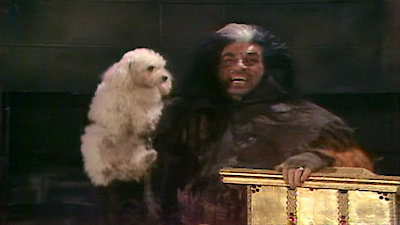
Against this backdrop strides the Witchsmeller Pursuivant, a fanatical and self-appointed inquisitor with an uncanny ability to smell out sorcery—real or imagined. A character as bombastic as he is shrewd, the Witchsmeller casts a looming shadow over the court with his pompous demeanor and flamboyant attire, evoking both ridicule and terror. Aided by his sniveling assistant, he is granted sweeping powers to identify and prosecute those suspected of consorting with the devil.
At the royal court, we find Prince Edmund—Duke of Edinburgh, known sarcastically as "The Black Adder"—grappling with his usual state of acrimonious idleness. He is unenthusiastically surrounded by his usual cohorts: the dim-witted Lord Percy Percy and the jaded, rotund monk Brother Baldrick. The trio typically engages in petty scheming, backstabbing, and bouts of creative cowardice, all signature elements that fans of the series have come to expect and adore.
As the Witchsmeller begins his zealous hunt for heathens, the episode satirizes the absurdity of medieval justice and the ease with which personal vendettas and ignorance can fuel mass hysteria. The murky world of medieval politics further complicates matters, and the Witchsmeller's fervor coincides with the political machinations at play within the kingdom. Suspicion falls randomly and viciously, as innocents are ensnared in a web of accusations and deceptive evidence.
The episode deftly combines the menace of the Witchsmeller's crusade with the comical incompetence of the main characters. In doing so, "Witchsmeller Pursuivant" brings to life the era's grim realities through the lens of farcical humor. The brilliance of the writing shines in the sharp dialogues, outrageous scenarios, and the ridiculous logic presented as courtly reason. The situational ironies are rife, and the audience cannot help but chuckle at the paradoxes presented—a testament to the show's writers, who deliver clever punchlines with a historical coating.
As the episode unfolds, Blackadder, Percy, and Baldrick find themselves caught in a spider's web of intrigue and superstition. The absurdity of the witch trials, with their concocted potions and dubious 'proofs' of witchcraft, are mined for laughs, yet also provoke thought about the real horrors that were perpetuated in the name of ignorance and fear in history.
The performances are top-notch, with sharp comedic timing and an underlying pathos that offer both a critique and a farce of the historical figures portrayed. The Witchsmeller, in particular, is a character study in zealotry, balancing a veneer of pious conviction with an undercurrent of opportunism—an embodiment of the madness that gripped many parts of Europe during the times of witch hunts.
The set design and costumes contribute immeasurably to the medieval ambiance, bedecking the characters in garb that ranges from the absurdly ostentatious to the raggedly pitiful. Such care in the details underscores the show's commitment to placing its comedic narrative within a recognizable historical frame, even as it playfully subverts the audience's expectations.
Viewers can expect a mix of verbal dexterity and lowbrow physical humor that typifies the Blackadder series in this episode. The laugh-out-loud moments are plentiful, yet cleverly interwoven with underlying themes about the dangers of ignorance and the seductive nature of unwarranted power.
In "Witchsmeller Pursuivant," Blackadder delivers an episode filled with dark comedy—yielding laughter that resonates with eerie echoes of the past. It invites the audience to revel in its humorous anachronisms while reflecting on the less humorous aspects of human nature and our history. This paradoxical approach makes the episode a standout installment in a series well-loved for both its wit and its willingness to prod at the absurdities of the human condition.