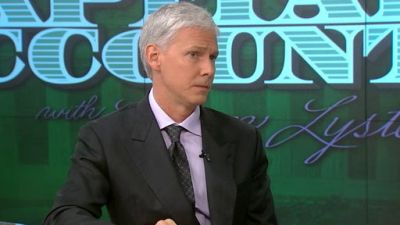
Capital Account Season 1 Episode 64 Richard Duncan On Riding Out This Depression On a Deflationary Debt Raft
- TV-PG
- August 14, 2012
Richard Duncan is the guest on this episode of Capital Account, titled "Riding Out This Depression On a Deflationary Debt Raft." Duncan is an economist, financial author, and publisher of Macro Watch, a video newsletter that analyzes current macroeconomic developments. In this episode, the host interviews Duncan to gain insight into his thoughts on current global economic conditions, deflation, and how debt plays a role in this complex puzzle.
The episode begins with the host asking Duncan about his article "The New Great Depression and What to Do About It." Duncan outlines his theory that we are experiencing a deflationary depression, which he defines as a situation where the total amount of debt is more significant than the total amount of money in the economy. As a result, he explains that the only way to avoid a complete collapse of the financial system is to continue to take on more debt.
Duncan then turns his attention to the global economy and how it's impacting the United States. He explains that the euro crisis is the primary threat to the US economy, as the potential collapse of the euro zone could send shockwaves worldwide. Duncan predicts that if the euro were to crash without the proper measures in place, we could experience a period of extreme deflation, not seen since the Great Depression.
The host then asks Duncan what can be done to avoid such a drastic outcome. Duncan provides several recommendations, including the creation of a debt monetization program in which the Federal Reserve would create new money and loan it to the government to fund infrastructure projects, such as rebuilding roads, highways, and bridges. Duncan believes that such a program would create jobs, boost productivity, and help inflate the economy.
The conversation then shifts to the role of debt in deflationary depressions. Duncan explains that as debt levels rise, the economy becomes less able to sustain growth. The debt saturation point is ultimately reached, at which point the economy crashes. At this point, he explains that the central bank can take two courses of action: decrease interest rates and expand the money supply, hoping to re-inflate the economy. Alternatively, they can take a more aggressive approach and engage in direct debt monetization, as previously mentioned.
The host then asks Duncan about his thoughts on gold and silver as investments during deflationary depressions. Duncan expresses his belief that gold and silver will not serve as a safe haven during a severe deflationary depression. However, he suggests that if the US government were to implement a debt monetization program, as he recommended earlier, then precious metals could be a worthwhile investment.
In conclusion, Richard Duncan's appearance on Capital Account provides an in-depth understanding of the role of debt in deflationary depressions. While his recommendations may not be universally accepted, his analysis is well-reasoned and thought-provoking. Anyone interested in global economic conditions and the interplay between debt and deflationary depressions will find this episode particularly enlightening.