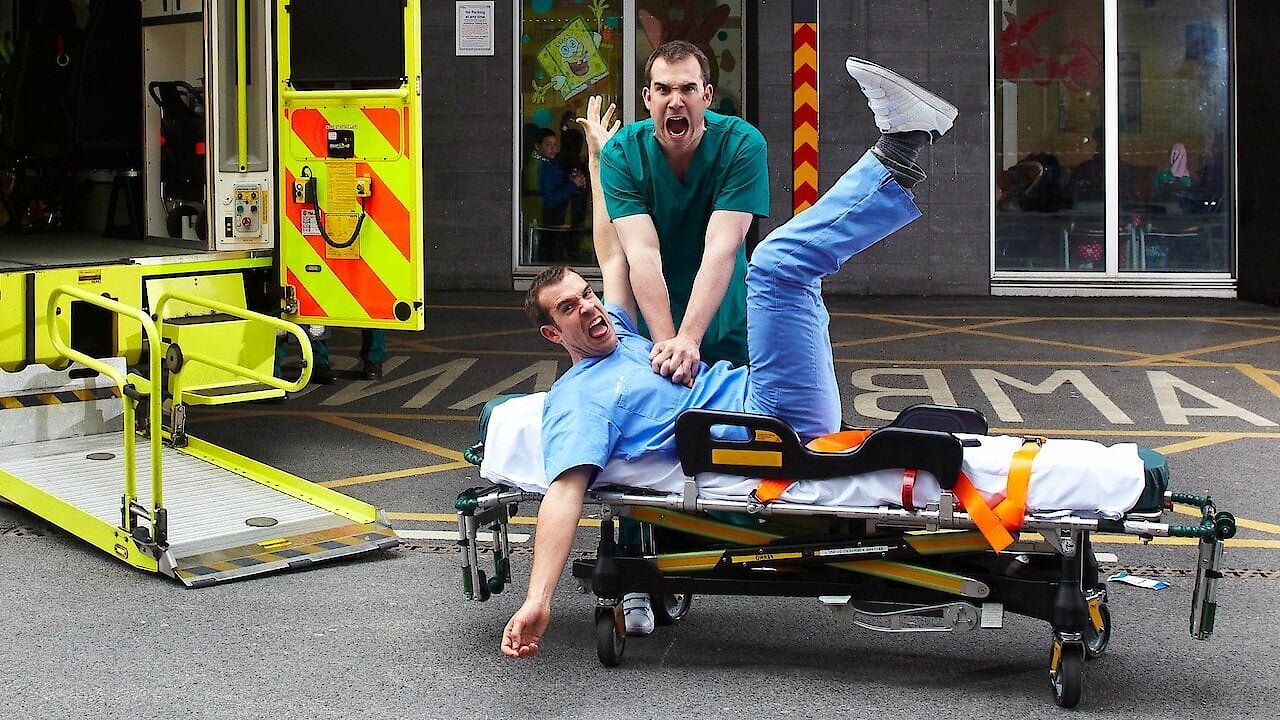
Operation Ouch Season 8 Episode 8 How Your Reflexes Can Save You
- February 13, 2019
- 27 min
In season 8 episode 8 of Operation Ouch, entitled "How Your Reflexes Can Save You," the show explores the science behind the body's automatic response to danger: reflexes. Hosts and identical twin doctors Chris and Xand van Tulleken take viewers along on a journey to uncover the secrets behind why and how our bodies react to protect ourselves.
Throughout the episode, the van Tulleken brothers perform various experiments and demonstrations to demonstrate the power of reflexes. They use specialized cameras to slow down footage of quick movements, such as a martial arts punch or a goalkeeper making a save, to show just how fast the body reacts without conscious thought. They also demonstrate how our bodies automatically respond to sudden stimuli, such as a hand touching a hot surface or a loud noise.
Additionally, the doctors explore the brain and nervous system to show how reflexes work on a physiological level. They examine how the nervous system works to send signals from the brain to the muscles in a split-second response, ensuring that we can move quickly to avoid danger.
The show also explores the idea of "reflex arcs," which are the pathways that impulses follow from the point of stimulation to the corresponding muscle that needs to react. The doctors use experiments to show how reflex arcs are responsible for quick reactions, such as blinking and flinching.
Throughout the episode, the van Tulleken brothers also discuss the potential dangers of reflexes, such as when the body overreacts to stimuli. For example, they examine the phenomenon of "bradycardia," which refers to the sudden slowing of the heart rate that can occur when the body is exposed to a sudden, massive shock. They also look at "hypertonia," which refers to the tightness and rigidity of muscles that can occur as an involuntary reflex in response to stimuli.
To illustrate the power of reflexes, the doctors perform a series of fun experiments to test viewers' reflexes. For example, they stage a race to see whose reaction time is the fastest and examine the science behind the classic game of "whack-a-mole." They also use slow-motion footage of a bodybuilder flexing his muscles to highlight just how quickly the body can react to stimuli.
Throughout the episode, the van Tulleken brothers emphasize the importance of reflexes in everyday life. They discuss how our reactions to danger can save lives in emergency situations, such as when swerving to avoid a car accident or instinctively grabbing onto something to prevent a fall. They also highlight how our reflexes can help us perform daily tasks more effectively, such as catching a ball or typing on a keyboard.
Overall, "How Your Reflexes Can Save You" is a fascinating exploration of the science behind our automatic responses to danger. Through a combination of experiments, demonstrations, and expert analysis, the show offers a unique look at the complex workings of the human body and the crucial role that reflexes play in keeping us safe.
