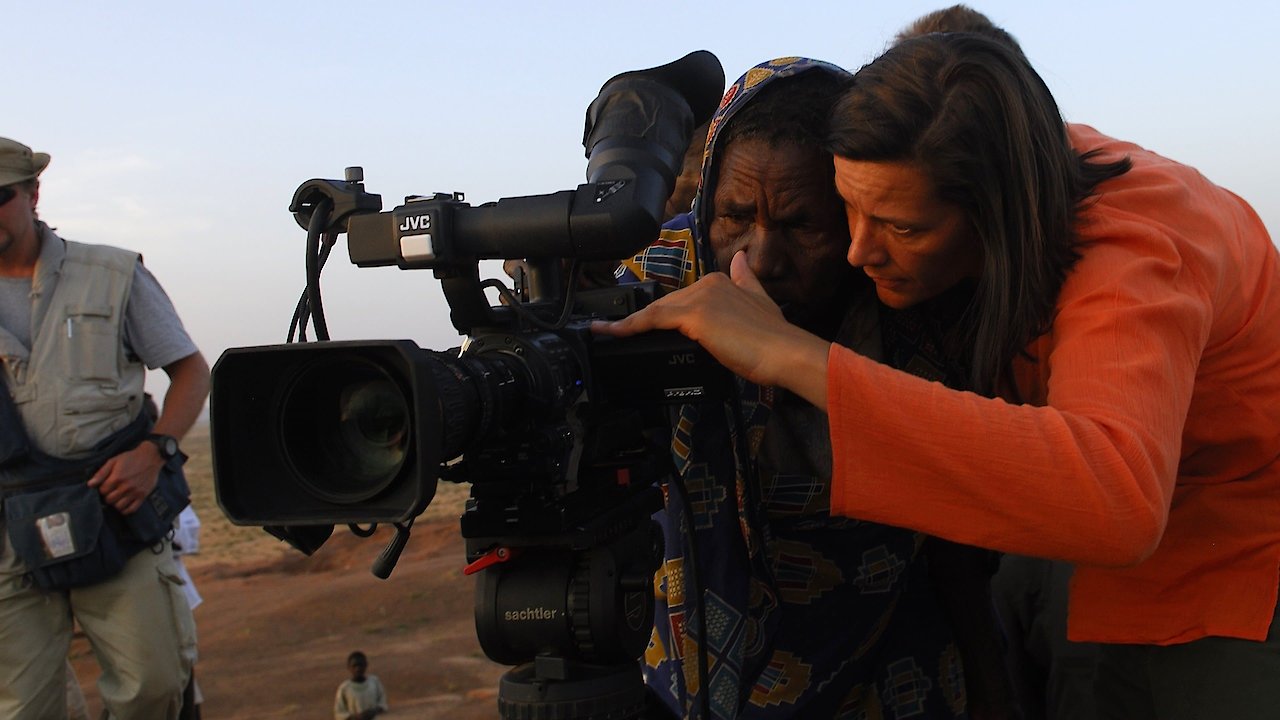
POV Season 10 Episode 6 Who is Henry Jaglom?
- July 8, 1997
Who is Henry Jaglom? That's the question that director/co-host/cinematographer/editor Sophie Fiennes sets out to answer in the latest episode of PBS's POV series. Those unfamiliar with Jaglom's work might be forgiven for asking the same question, as his name may not be as well-known today as some of his contemporaries from the 1970s and '80s independent film scene.
But for Fiennes, Jaglom is an unsung hero of cinema, and in this hour-long documentary, she makes a compelling case for his place in film history.
The episode takes the form of a playful and occasionally irreverent journey through Jaglom's life and career, structured around Fiennes's own encounters with him. We see her interviewing Jaglom on the set of his latest film, sitting down with him in his home to watch his old movies, and joining him for lunch at Hollywood's legendary Musso & Frank Grill, where Jaglom is a regular. Along the way, we also hear from a variety of actors, friends, and collaborators who have worked with Jaglom over the years, including Orson Welles, Candice Bergen, and Melanie Griffith.
One of the main themes that emerges in the episode is Jaglom's commitment to authenticity and spontaneity in his films. Unlike many Hollywood directors, Jaglom eschews big budgets and elaborate sets in favor of a more down-to-earth approach. His movies often blur the line between fiction and reality, with much of the dialogue improvised by the actors and the storylines based on their own experiences. As one interviewee puts it, "His movies feel like life, not like movies."
Fiennes highlights this aspect of Jaglom's filmmaking by interspersing clips from some of his most memorable films, such as "Eating" and "Someone to Love," with behind-the-scenes footage and commentary. We see how Jaglom works with actors to develop their characters and create moments of emotional intensity, using his own life as a source of inspiration. For example, we learn that the character of Marilyn in "Eating" was based on Jaglom's own mother, and that the film's scenes of women discussing their relationship with food were drawn from real-life conversations with his female friends.
Another key aspect of Jaglom's filmmaking philosophy is his belief in the power of women's stories. Many of his films center on complex, nuanced female characters, and he has been an outspoken advocate for more opportunities for women both in front of and behind the camera. Fiennes explores this theme by talking to several of the actresses who have worked with Jaglom over the years, including Karen Black and Tanna Frederick, and by highlighting some of the key female characters in his films.
Throughout the episode, we get a sense of Jaglom's charismatic and idiosyncratic personality, as well as his strong opinions about art, politics, and human nature. He comes across as a lovable but occasionally difficult figure, prone to eccentric pronouncements and long-winded stories. Nevertheless, Fiennes clearly holds him in high esteem, and the episode is ultimately a tribute to his unique contribution to the world of cinema.
Fans of Jaglom's films will no doubt find much to enjoy in this episode, as it provides a rare glimpse into the mind of a filmmaker who has always marched to the beat of his own drum. But even those who are unfamiliar with his work will find plenty to appreciate here, as Who is Henry Jaglom? is an engaging and entertaining exploration of a fascinating artistic figure. So, it is a must-watch for film enthusiasts.
