POV Season 31 Episode 9 Whose Streets?
- July 30, 2018
In “Whose Streets?,” the ninth episode of POV’s 31st season, directors Sabaah Folayan and Damon Davis explore the response of the Ferguson community to the shooting of Michael Brown by police officer Darren Wilson in August 2014. Using a mix of archival footage, cell phone videos, and interviews with activists and community members, the documentary provides a raw and unfiltered look at the protests and unrest that followed Brown’s death.
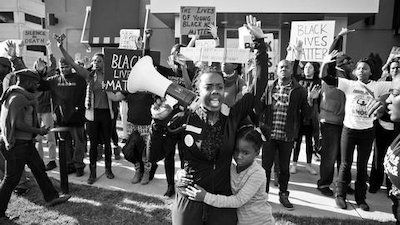
Through the eyes of several of the people who were at the center of the movement, “Whose Streets?” tells the story of how a small suburb of St. Louis became the epicenter of a national conversation about police brutality, race relations, and the inequities faced by black Americans. The film does not shy away from the anger and frustration of the protestors, nor does it gloss over the violence that erupted during the protests. However, it also highlights the beauty and resilience of a community that came together in the face of tragedy and oppression.
One of the film’s strengths is its ability to capture the diversity of the Ferguson community. The directors spoke with a range of people, from high school students to pastors to grandparents, and each of them had a unique perspective on what was happening in their town. They also showed how the protests in Ferguson inspired similar demonstrations across the country, as people rallied around the hashtag #BlackLivesMatter.
“Whose Streets?” is not a neutral or objective look at what happened in Ferguson. It is clear that the filmmakers stand with the protestors, and they make no apologies for that. However, this does not mean that the film lacks nuance or complexity. They interview police officers who were on duty during the protests, as well as politicians who were involved in the local government. They also acknowledge the critiques that have been levied at the Black Lives Matter movement, including accusations that it is violent or anti-police.
One of the most moving moments in the film comes when a group of women, including Brown’s mother, meet with President Obama in the Oval Office. The women recount their personal experiences with police brutality and systemic racism, and the President listens with empathy and concern. It is a powerful illustration of the impact that the protests in Ferguson had on the national conversation.
In addition to its political themes, “Whose Streets?” is also a powerful human-interest story. The directors spend time with several activists, including Brittany Ferrell and her partner Alexis Templeton, who become the film’s emotional center. We see their love for each other, their family, and their community, as well as the toll that the activism takes on them. Through their eyes, we understand how the movement was not just about fighting for justice for Michael Brown, but also about demanding a better future for all black Americans.
Overall, “Whose Streets?” is a powerful and moving film that sheds light on a crucial moment in our recent history. It reminds us that police violence and racial inequality are still very much with us, and that we all have a responsibility to fight against them. At the same time, it celebrates the courage and resilience of the people who stood up for justice in Ferguson, and the power of grassroots activism to effect real change.