Sci-Fi Science: Physics of the Impossible Season 1 Episode 11 How to Build a Fying Saucer
- TV-G
- February 9, 2010
- 20 min
-
6.4 (14)
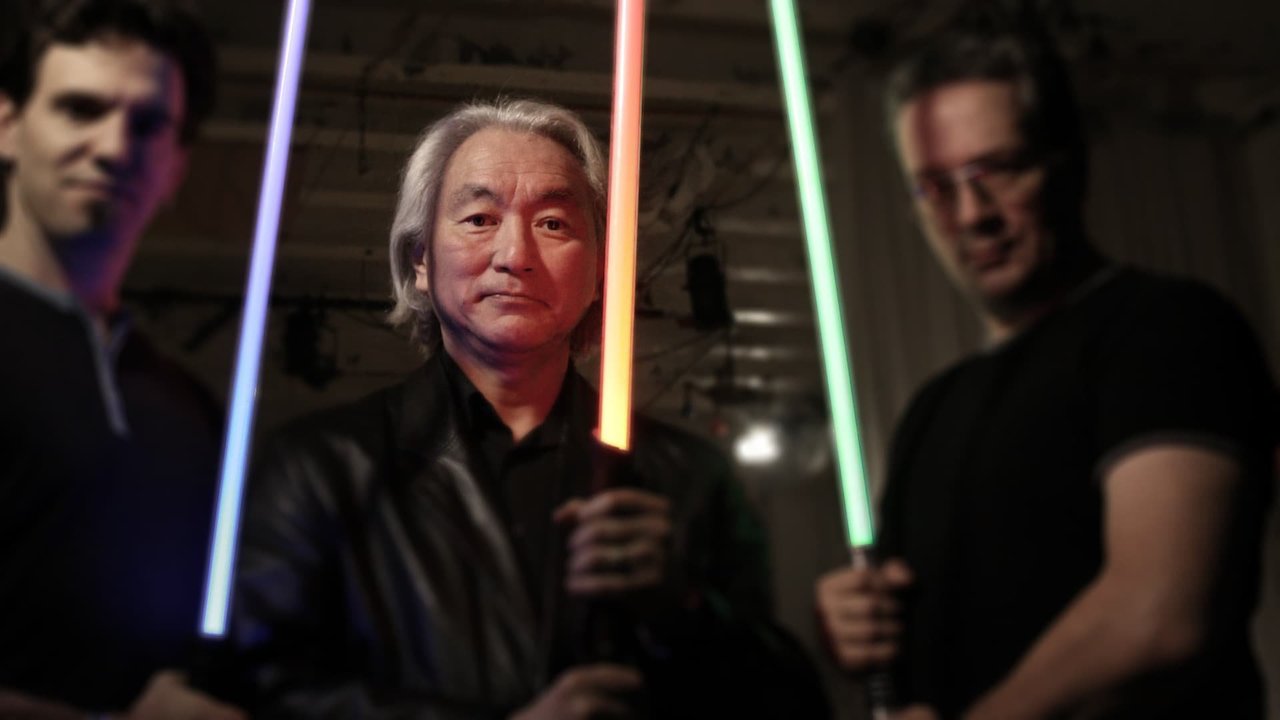
In this episode of Sci-Fi Science: Physics of the Impossible season 1, we explore the possibility of building a flying saucer. Host and physicist Michio Kaku breaks down the concept of anti-gravity and how it can be used to create a spaceship that flies without wings or rocket propulsion.
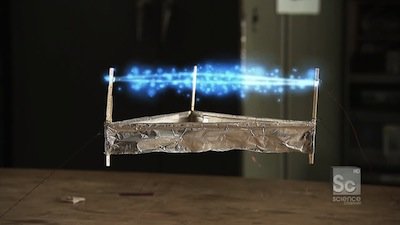
Kaku starts by explaining the theory of general relativity and how it relates to gravitational forces. He then moves on to the concept of negative mass, which would create a repulsive force that could potentially overcome the gravitational force of the earth. Kaku then describes how a spinning disk could generate an electromagnetic field that, when combined with negative mass, could create an anti-gravity effect.
To test this theory, Kaku visits a laboratory where scientists are working on creating a superconductor that can levitate objects. He explains how this technology could be used to construct a flying saucer.
Next, Kaku discusses the importance of understanding propulsion in building a flying saucer. He describes how ion engines and microwave engines could be used to provide the necessary propulsion to travel through space.
To further explore the concept of flying saucers, Kaku looks at historical sightings and encounters of UFOs. He discusses the possibility that some of these sightings could have been military experiments with advanced technology that was not yet understood by the public.
Finally, Kaku brings it all together by discussing the future of space travel and the potential for building a flying saucer. He explains how anti-gravity and advanced propulsion systems could be used to create a spacecraft that could travel to other planets in our solar system and beyond.
Overall, this episode of Sci-Fi Science: Physics of the Impossible gives viewers a fascinating look at the science behind the concept of a flying saucer and the potential for this technology in the future of space exploration.