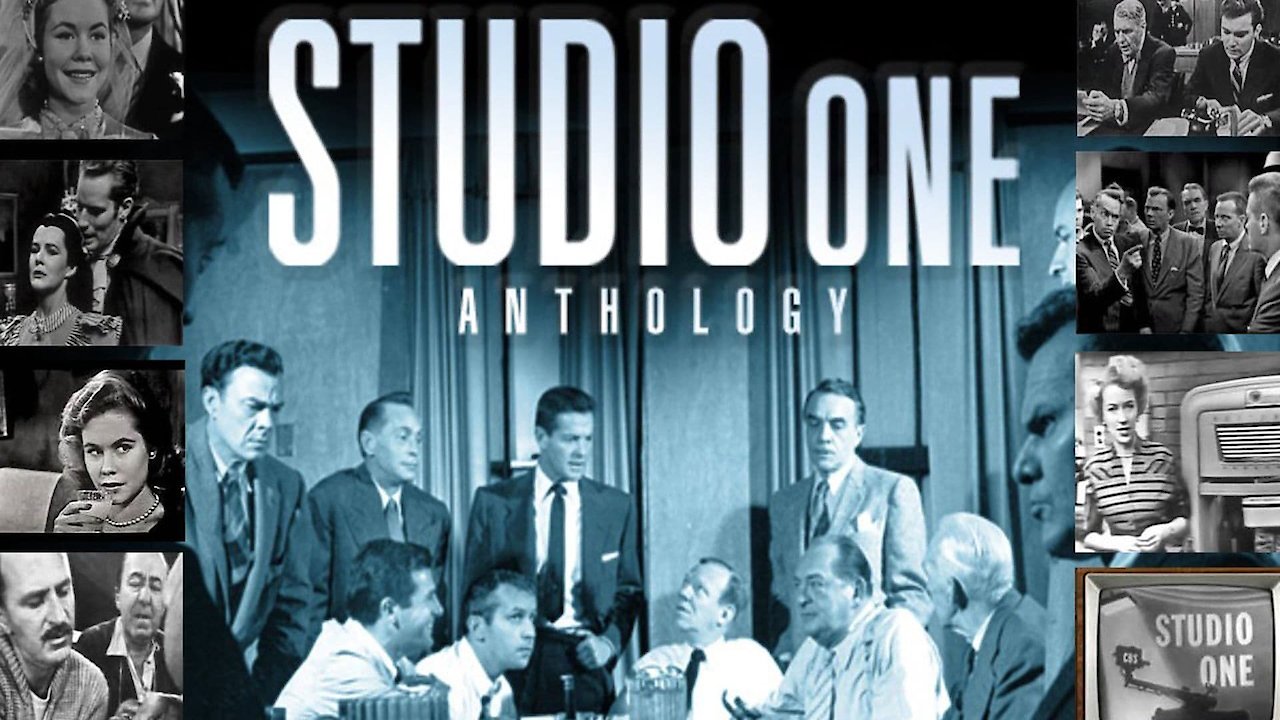
Studio One Season 10 Episode 1 The Night America Trembled
- September 9, 1957
-
6.6 (143)
On September 9, 1957, Studio One aired a landmark episode that became a defining moment in television history. The episode, titled "The Night America Trembled," was a re-enactment of the infamous panic that swept the nation in the wake of Orson Welles's 1938 radio broadcast of "The War of the Worlds."
The episode begins with a voiceover explaining the cultural context of the broadcast: it was a time when the world was on the brink of war, and many Americans were on edge about the prospect of a foreign invasion. Against this backdrop, Welles's retelling of H.G. Wells's classic sci-fi novel, presented in the form of a breaking news bulletin, had a profound impact on listeners who mistook it for a genuine news report.
"The Night America Trembled" stages a fascinating behind-the-scenes look at the making of Welles's broadcast, interspersed with dramatizations of how news of the purported Martian invasion spread throughout the country. The show utilizes various filming techniques to create a sense of authenticity, including newsreel-style footage of everyday Americans reacting to the broadcast in real time, as well as still photographs of key locations and figures involved in the panic.
The episode features a star-studded cast of young actors who would go on to become major Hollywood players, including Warren Beatty, Ed Asner, James Coburn, and John Astin. Beatty, in particular, gives a standout performance as a radio technician tasked with patching together various phone lines to get updates on the "invasion" from around the country.
One of the most powerful elements of the episode is the way it captures the fear and confusion of ordinary Americans as they grappled with the possibility of an otherworldly threat. We see people praying in churches, gathering in the streets, and even attempting to arm themselves against the supposed invaders. The episode also touches on the way the panic was fueled by sensationalist reporting in the press, with headlines proclaiming "World Ends!" and "Ghouls Walk Among Us."
At the same time, the episode portrays the media's role in ultimately calming public fears. We see journalists racing to debunk the rumors of an invasion and assure the public that it was all a fictional story. In this sense, "The Night America Trembled" can be seen as a tribute to the power of responsible journalism in the face of hysteria.
Although the episode was created nearly 20 years after the panic it depicts, it still manages to capture the intensity of the moment, painting an indelible portrait of a nation on the brink of mass hysteria. It's a testament to the enduring power of the original radio broadcast, as well as a reminder of the importance of critical thinking and skepticism in the face of sensationalized news.
"The Night America Trembled" is a must-watch for anyone interested in the history of broadcast media or the ways in which Americans have responded to perceived threats throughout history. It's a timeless cautionary tale that continues to resonate today, even as the world has changed in countless ways since it first aired.
