Happily Ever After: Fairy Tales For Every Child Season 1 Episode 7 The Frog Prince
- April 16, 1995
- 24 min
In "The Frog Prince," the seventh episode of the first season of Happily Ever After: Fairy Tales For Every Child, viewers are taken on a magical journey through the classic fairy tale about a prince who is turned into a frog and the princess who sets out to break the spell.
In this retelling of the story, the prince is an African-American boy named Cedric who loves to play his trumpet and is awestruck by the beauty of princess Daphne. As the story unfolds, we learn that Cedric has been cursed by a wicked witch and can only be saved by a kind princess who agrees to share her dinner with him and let him sleep in her bed for three nights.
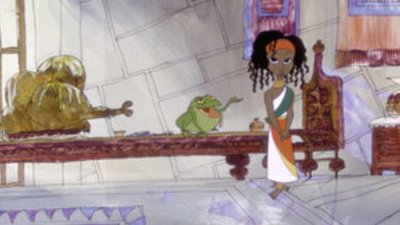
Despite her initial reservations about spending time with a frog, princess Daphne takes pity on Cedric and agrees to his request. Over the course of the three nights, Cedric teaches Daphne how to play his trumpet and the two of them bond over their shared love of music.
As the final night arrives, Daphne is conflicted about whether or not to kiss Cedric and break the curse. Just as she is about to make her decision, the wicked witch appears and tries to take Cedric away. Fortunately, Daphne is able to outwit the witch and break the curse with a kiss, transforming Cedric back into his true form as a handsome prince.
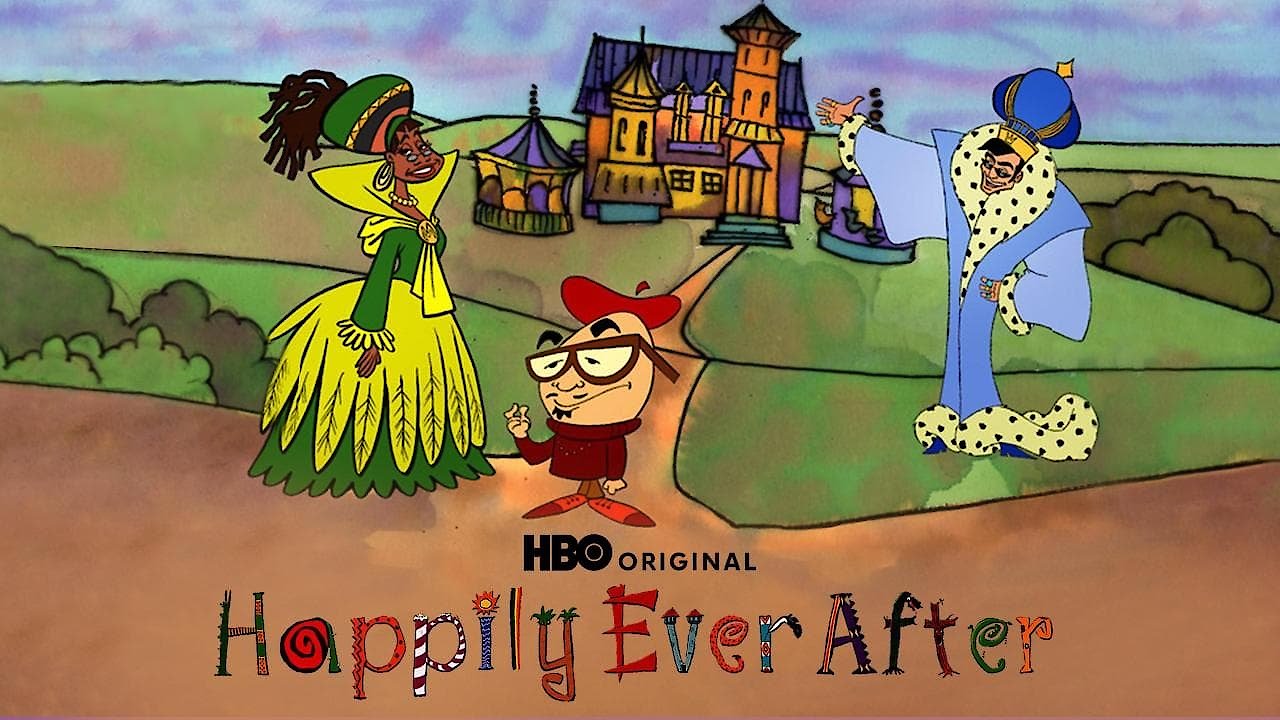
Throughout the episode, viewers are treated to the vibrant colors and imaginative storytelling that are a hallmark of Happily Ever After: Fairy Tales For Every Child. The characters are brought to life with a mix of traditional animation and computer-generated graphics, giving the story a unique and modern feel.
In addition to its visual appeal, "The Frog Prince" also has a strong musical component, with several original songs written for the episode. From Cedric's jazzy trumpet solos to Daphne's soulful singing, the music adds an extra layer of depth and emotion to the story.
Overall, "The Frog Prince" is a heartwarming tale of friendship, perseverance, and the transformative power of love. It is a testament to the enduring appeal of fairy tales and the importance of diverse representation in children's media.