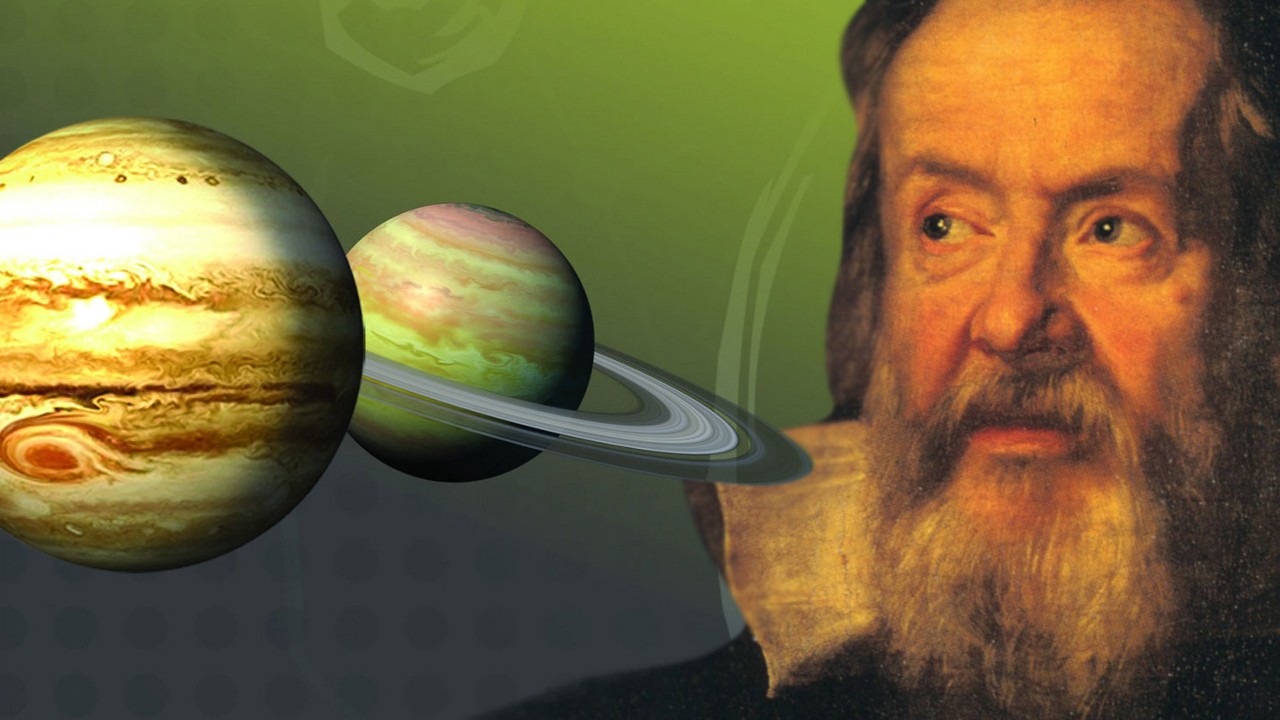
Physics and Our Universe: How It All Works Season 1 Episode 2 Languages of Physics
- TV-PG
- September 30, 2011
- 31 min
In season 1 episode 2 of Physics and Our Universe: How It All Works, titled Languages of Physics, viewers are taken on a journey through the different languages used by physicists to explain the mysteries of the universe.
The episode starts with an introduction to the concept of a "physical language." Physicists use language to communicate their ideas and theories, just like any other field. But unlike other fields, physicists often have to describe things that cannot be seen or touched, such as the behavior of subatomic particles or the curvature of space-time. In order to do this, they have developed specialized language that can be incredibly complex and difficult for outsiders to understand.
The first language discussed is mathematics. Math is often considered to be the language of the universe because it can describe everything from the behavior of atoms to the movement of galaxies. The episode explores how mathematicians and physicists work together to create mathematical models that accurately describe physical phenomena. Viewers get a glimpse into the world of mathematical equations and see how complex ideas can be expressed in a language made up of symbols and numbers.
Next, the episode delves into the language of quantum mechanics. Quantum mechanics is a branch of physics that deals with the behavior of subatomic particles, and it is notoriously difficult to understand. The episode explains how physicists have developed their own vocabulary to describe the strange behavior of particles like electrons and photons. Viewers learn about concepts like superposition, entanglement, and wave-particle duality, and how they are used to describe the behavior of particles on a quantum level.
From there, the episode moves on to the language of relativity. Relativity is another branch of physics that deals with large-scale phenomena like gravity and the curvature of space-time. The language of relativity is highly mathematical and involves concepts like tensors and differential geometry. Viewers get a glimpse into the complex equations that describe the behavior of massive objects like black holes and the expanding universe.
The episode also explores the role of diagrams and visual representations in physics. Many physicists use diagrams and graphs to help explain their ideas, and the episode shows how simple images can convey complex concepts. Viewers learn about the Feynman diagram, a tool used by physicists to represent the behavior of subatomic particles. They also see how simple models like the rubber sheet analogy can help explain the curvature of space-time in relativity.
Throughout the episode, viewers are introduced to a number of prominent physicists who have contributed to the development of these languages. They learn about figures like Albert Einstein, Richard Feynman, and Stephen Hawking, and the impact their work has had on the field of physics.
Overall, Languages of Physics is an engaging and informative exploration of the different languages used by physicists to describe the workings of the universe. Viewers will come away with a greater appreciation for the complexity of physics and the importance of language in communicating scientific ideas.
