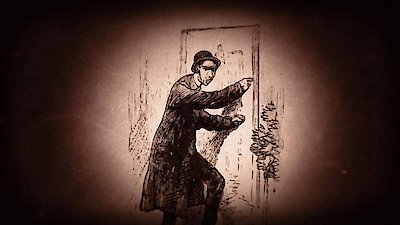
Railway Murders Season 1 Episode 2 The Body in the Tunnel
- May 2, 2021
- 43 min
The Body in the Tunnel is the second episode in the first season of the Railway Murders. The show is a true-crime series that investigates a series of murders that occurred on trains or railways in Britain between the 1830s and 1965.
In this episode, a train driver discovers the body of a young woman in a railway tunnel. The victim had been strangled and left there to be run over by the train. The police are called in to investigate, and they soon discover that the victim is Mary Ashford, a local barmaid who had been missing for several days.
Detective Inspector Tom Mundy takes charge of the investigation, and he soon discovers that Mary had been at a dance on the night of her disappearance. She had been seen leaving with a man, but nobody knew who he was. Mundy and his team question everyone who was at the dance, and they eventually identify a suspect.
James Thornton, a local farm labourer, had been seen with Mary at the dance. When questioned by the police, he claims that he had left her at a crossroads near her home. However, Mundy believes that Thornton is lying, and he orders his arrest.
At Thornton's trial, the prosecution argues that he had killed Mary after attempting to rape her. They present evidence from a witness who had seen Thornton and Mary together on the night of the murder, and they claim that Mary's injuries were consistent with a sexual assault. However, Thornton's defence team argues that there is no direct evidence linking him to the crime, and that the prosecution's case is purely circumstantial.
The trial lasts for several days, and there are many twists and turns along the way. At one point, Mundy discovers that Thornton has an alibi for the time of the murder, but he is unable to prove it in court. In the end, the jury finds Thornton guilty, and he is sentenced to death.
The Body in the Tunnel is a gripping episode of the Railway Murders. It shows how the police were able to use new forensic techniques to solve a crime that had seemed unsolvable. It also highlights the difficulties that the police faced in a world without DNA evidence or CCTV cameras. Overall, it is a fascinating insight into the history of crime detection in Britain.
