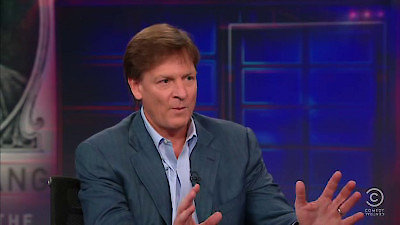
The Daily Show with Jon Stewart Season 17 Episode 2 Michael Lewis
- October 4, 2011
-
6.0 (29)
In Season 17, Episode 2 of The Daily Show, host Jon Stewart welcomes best-selling author and journalist Michael Lewis to the program. Known for his keen insights into finance and human behavior, Lewis's appearance promises an engaging discussion that digs deep into the themes that have defined his celebrated works.
This episode serves as an exploration of the intricate relationships between finance, economics, and everyday life, themes that resonate throughout Lewis's writings. From his groundbreaking book Liar’s Poker, which details his experiences on Wall Street, to The Big Short, a piercing examination of the 2008 financial crisis, Lewis has consistently drawn upon his experiences and observations within complex systems to highlight the idiosyncrasies of human decision-making and institutional behavior. Jon Stewart, with his signature blend of humor and sharp intellect, engages Lewis in conversations that reflect on contemporary economic realities, the motivations behind financial systems, and the often absurd nature of human greed.
Stewart doesn't shy away from challenging questions, as he navigates the often convoluted terrain of financial jargon, seeking to distill it into insights that the general public can understand. The banter between Stewart and Lewis is at once hilarious and thought-provoking, showcasing Stewart's ability to weave humor into serious discussions without undermining their importance. Their chemistry brings a dynamic energy to the episode, with Stewart's satirical lens illuminating Lewis's observations on societal trends.
As a notable figure in the media landscape, Michael Lewis brings a wealth of knowledge and an engaging storytelling ability that captivates the audience. His experience as a financial journalist allows him to elaborate not only on economic concepts but also on the broader implications they have on society. Viewers can expect Lewis to discuss the challenges of writing about institutions that often seem inscrutable and the challenge of making complex topics accessible to a lay audience.
Throughout the episode, the conversation oscillates between providing insightful commentary on current events and maintaining an entertaining atmosphere. Stewart's comedic timing keeps the mood light, even as he addresses heavy themes like economic inequality and the consequences of deregulation. The episode remains topical, as it relates Lewis's insights to events occurring in real-time, creating a lively dialogue that not only entertains but also educates.
The show also features classic Daily Show segments, interlaced between the main interview with Lewis. These segments often highlight the absurdities of contemporary news, using mock news pieces and satirical commentary to critique everything from political maneuvers to social trends. It creates a tapestry of content that balances serious discussion with comedic relief, showcasing the dual purpose of The Daily Show as both an informative source and a hub of entertainment.
In this episode, viewers will also witness Stewart's signature style of poking holes in conventional wisdom and challenging prevailing narratives, particularly as they relate to the financial industry. This is an integral part of the show’s appeal and reflects its mission to engage audiences in critical thinking. The tone is both irreverent and insightful, a hallmark of Stewart's tenure on the show.
The presence of a guest like Michael Lewis adds an extra layer of depth. His ability to contextualize historical financial phenomena against the backdrop of modern concerns creates a bridge between past and present. As they delve into Lewis’s latest projects and findings, the episode offers viewers a chance to reflect on the cyclical nature of economic trends and the human behaviors driving them.
As the episode progresses, Lewis’s anecdotes and analyses provide a fascinating glimpse into not just the mechanics of finance but also the ethical dilemmas that surround it. The discourse on personal responsibility and the influence of systemic flaws encourages a broader conversation about accountability in leadership and policy-making.
Yet, amidst the serious undertones, the episode maintains a playful spirit, demonstrating how humor can serve as a powerful tool for critiquing societal issues. Stewart’s knack for inviting insightful discourse while keeping the audience engaged through laughter remains unmatched, making this episode a compelling edition of The Daily Show.
Overall, Season 17, Episode 2 featuring Michael Lewis is a blend of humor, critical insight, and timely relevance. It encapsulates the essence of The Daily Show as a platform for enriching conversations in the realm of politics, finance, and beyond, ensuring that viewers walk away both entertained and informed.