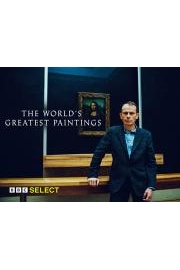
The World's Greatest Paintings

Watch The World's Greatest Paintings

  • TV-PG
  • 2020
  • 1 Season

The World's Greatest Paintings is an enlightening art series that allows viewers to discover and appreciate the world's most remarkable paintings with a fresh perspective. The show is produced by BBC Select, a streaming platform that curates thought-provoking documentaries, biographies, and series from around the world.

The show's creators delve into the history of painting and its evolution from ancient times through modern-day. The World's Greatest Paintings is more than just a showcase of famous paintings; it is a voyage through the artistic movements that shaped our world.

Throughout the series, viewers are taken on a journey that explores the artists' methods and techniques, the stories behind their creations, and the social and cultural context in which they were made. The show features commentary from art experts who share their insights on the art and the artists who created them.

The World's Greatest Paintings showcases masterpieces from different periods in history, including the Renaissance, Baroque, and Romanticism. The series takes viewers inside some of the world's most prestigious art galleries such as the Louvre in Paris, The National Gallery in London, The Rijksmuseum in Amsterdam, and many others.

The first episode of the series examines the works of the iconic Renaissance artist, Leonardo da Vinci. The episode sheds light on how da Vinci's masterpieces such as Mona Lisa and The Last Supper inspired a new class of artists, fuelling the Italian Renaissance. The episode also goes behind the scenes and explores the techniques used by da Vinci in creating his artworks.

The show's second episode is dedicated to the Dutch painter Johannes Vermeer. Vermeer is well known for his meticulous attention to detail in his paintings, and the episode focuses on his most famous painting, 'Girl with a Pearl Earring'. The painting is one of the most replicated and reinterpreted artworks in history, and the episode delves into its historical significance and its cultural impact.

The third episode of the series explores the world of the Romanticism movement, which emerged in the late eighteenth century. Romanticism is a broad artistic and intellectual movement that focuses on emotion, individualism, and the celebration of the natural world. The episode familiarizes viewers with three significant romantic painters; Turner, Constable, and Gericault.

The series' fourth episode tells the story of the Spanish Baroque painter, Diego Velazquez. Velazquez was appointed as the official court painter to King Philip IV of Spain, and his artworks became some of the most celebrated and valuable pieces of that period. The series showcases some of his famous works, including 'The Surrender of Breda' and 'Las Embarcaciones'.

The final episode of the series reviews the Pre-Raphaelite movement which emerged in the mid-nineteenth century in England. The Pre-Raphaelites were a group of artists that rejected the conventional Victorian art and, instead focused on realism and nature. The episode highlights the works of the most renowned Pre-Raphaelite painters such as John Everett Millais, William Holman Hunt, and Dante Gabriel Rossetti.

Overall, The World's Greatest Paintings is an excellent art series that provides a new perspective and appreciation for some of the world's most remarkable paintings. The show's commentary, coupled with stunning visuals and excellent production, provides a comprehensive and engaging tour of art history. The series is a must-watch for anyone who has an appreciation for art and its impact on our world.

The World's Greatest Paintings is a series that ran for 1 seasons (24 episodes) between June 5, 2020 and on BBC Select

Filter by Source

Seasons
Expressive Abstractions-Pollock and Hofmann
24. Expressive Abstractions-Pollock and Hofmann
June 18, 2026
Track Jackson Pollock's whole-body approach to putting paint on canvas, and tease out the layered color fields in his elemental force of nature, "Lavender Mist." Then contrast Hans Hofmann's mastery of geometry and color with his brutal, agonized creation, "to JFK." Conclude with reflections on the power of great art.
Time and Memory-Magritte, Hopper, Gorky
23. Time and Memory-Magritte, Hopper, Gorky
June 18, 2026
In Magritte's "Time Transfixed," observe how the artist calmly dislocates our sense of temporal and physical reality. In the famous "Nighthawks," study Hopper's careful, deliberate design evoking the silent separateness of the figures. Finally, trace Gorky's inspired craft in bringing to life the joyful explosion of color in "The Plough and the Song."
Art in Time of War-Monet and Picasso
22. Art in Time of War-Monet and Picasso
June 18, 2026
Two milestones of 20th-century art: Learn about the creation and the architectural display of Monet's transcendent series of water-lilies, parsing his superlative brushwork reflecting sky, clouds, and sunlight on water. Then take apart the writhing, nightmarish images in Picasso's "Guernica," evincing his pained response to the atrocities of war.
The Human Condition-Munch, Matisse, Schiele
21. The Human Condition-Munch, Matisse, Schiele
June 18, 2026
Analyze Munch's pictorial composition of "The Scream," as its pulsating visual field embodies the figure's cry of psychic terror. In stunning contrast, study Matisse's lyrical, floating colors and figures in "The Joy of Life," then conclude with Egon Schiele's "The Family" and its bold evocation of his own hopes and fears.
Close Observation-C
20. Close Observation-C
June 18, 2026
Uncover the structural geometry and unity of focus in C
Unlike Any Other-Sargent, Manet, Seurat
19. Unlike Any Other-Sargent, Manet, Seurat
June 18, 2026
In John Singer Sargent's elusive portrait of the daughters of a friend, ponder the unusual placement and psychological separation of the subjects. Then, explore the deliberate unreality of Manet's "Bar at the Folies-Berg
Alone and Together-Whistler, Degas, Renoir
18. Alone and Together-Whistler, Degas, Renoir
June 18, 2026
In the ever-familiar image of Whistler's mother seated in profile, observe the superlative blending of abstract, formal composition with the intimate portrayal of a living woman. Follow with the pictorial riches and psychological ambiguities of Degas' "In a Caf
Dark to Bright-Courbet, Church, Monet
17. Dark to Bright-Courbet, Church, Monet
June 18, 2026
French and American canvases reveal bold innovations in 19th-century painting. Contemplate the elements of Realism in Gustave Courbet's sprawling, slow-motion composition of a rural funeral, followed by Frederic Church's dynamically original depiction of Niagara Falls. Then study Monet's blaze of sunlight and color on a snowscape in "The Magpie."
The Worlds of Constable, Turner, Delacroix
16. The Worlds of Constable, Turner, Delacroix
June 18, 2026
Compare the styles and originality of British landscape masters Constable and Turner, highlighting Constable's compositional technique and signature cloud-filled skies, plus Turner's bravura use of color and light. In Delacroix's "Liberty Leading the People," examine the artist's allegorical fusing of symbol and reality in the heat of France's 1830 revolution.
Dark Images of David, Goya, Friedrich
15. Dark Images of David, Goya, Friedrich
June 18, 2026
Portrayals of brutality open this lecture. Observe David's merging of idealized presentation and realism in the stark "Death of Marat," and Goya's bitter vision of military retaliation in "Third of May, 1808." Finally, study the Romantic evocation of nature in Friedrich's "Man and Woman Contemplating the Moon."
In Contrast-Chardin, Tiepolo, Gainsborough
14. In Contrast-Chardin, Tiepolo, Gainsborough
June 18, 2026
Three diverse works reveal 18th-century achievements in painting. In a small still life, ponder Chardin's delicate, intimate portrayal of game animals in death. Then discover Tiepolo's apotheosis of fresco painting in "Apollo and the Four Continents," and Gainsborough's ingenious melding of sitter and landscape in his portrait "Mrs. Richard Brinsley Sheridan."
The Serenity of Poussin, Claude, Watteau
13. The Serenity of Poussin, Claude, Watteau
June 18, 2026
Define the measured grace and brilliant use of color, shape, and gesture in Poussin's "Eliezer and Rebecca." Study the elements of Lorrain's consummate mastery of the landscape, and the dreamlike qualities of Watteau's wistful fantasy, the "Embarkation for Cythera."
Spirit and Thought-Hals, Rembrandt, La Tour
12. Spirit and Thought-Hals, Rembrandt, La Tour
June 18, 2026
Study Hals's penetrating treatment of elderly women in a Haarlem group portrait. Then explore Rembrandt's expression of a couple's deep emotion through an intimate configuration of hands and fabric, and La Tour's evocation of mystical contemplation through a flame.
Inside Vermeer, Vel
11. Inside Vermeer, Vel
June 18, 2026
Explore three introspective works of genius. In "View of Delft," reflect on Vermeer's purpose in this becalmed, idealized rendering of his city. Also decode the ambiguous, philosophical composition of Velazquez's "Maids of Honor," and Rembrandt's richly costumed, stoic portrayal of himself in his "Self-Portrait" of 1658.
The Birth of Venus by Sandro Botticelli
10. The Birth of Venus by Sandro Botticelli
June 5, 2020
It's a painting so magical that grown men have been said to faint while standing in front of it. The story behind Botticelli's The Birth of Venus is one of a tubby artist and a 15th Century traffic-stopping beauty played out against a backdrop of mind-boggling wealth and religious fanaticism. But over 500 years since its creation, why is this work still so mysterious and compelling?
Ophelia by John Everett Millais
9. Ophelia by John Everett Millais
June 5, 2020
It's one of the most arresting and intriguing visions ever committed to canvas. But the story of John Everett Millais's Ophelia is as dramatic as the Shakespeare heroine portrayed in the picture. This haunting image was once the centerpiece of a radical artistic movement and dismissed by some critics, but is now beloved globally. But how is grave robbing connected to the painting?
The Night Watch by Rembrandt Van Rijn
8. The Night Watch by Rembrandt Van Rijn
June 5, 2020
Nowadays, Rembrandt is considered one of the most masterful painters who ever lived. But after a glittering start to his career, he was buried in a pauper's grave and largely forgotten with his style considered painfully outmoded. How did this great man descend so rapidly, from the heights of his finest, gargantuan work The Night Watch, to the tragedies of poverty and obsolescence?
The Rokeby Venus by Diego Velazquez
7. The Rokeby Venus by Diego Velazquez
June 5, 2020
Seen as a paradigm of female beauty, Velazquez's only nude is considered one of the most erotically charged paintings of any age. In a time when such works were rare, due to the influence of the Inquisition, the painting adorned the secret sin-filled salons of the Spanish elite. But why is it considered so controversial and what drove one woman to attack it with a meat cleaver?
The Hay Wain by John Constable
6. The Hay Wain by John Constable
June 5, 2020
At first glance it appears to be a scene of bucolic splendor. But John Constable's Hay Wain has hidden, radical depths. Now considered one of the most beloved English paintings of all time, it was shunned initially and first found fame in France where it inspired a plethora of young artists. But how is this seemingly serene countryside scene seething with non-conformity?
Waterlilies by Claude Monet
5. Waterlilies by Claude Monet
June 5, 2020
One of the most famous associations in the entire history of art is between Claude Monet and waterlilies. He painted them hundreds of times during the final part of his life. But why was he so obsessed with this singular image? The true tale behind this serene vision of delicate nature reveals deeply personal tragedies, a brutal war and a tormented man with an insatiable passion.
Weeping Woman by Pablo Picasso
4. Weeping Woman by Pablo Picasso
June 5, 2020
The work, and image, of few artists is so instantly recognizable as Picasso. But what is it about this man that makes his creations so distinctive? Andrew Marr delves into the story behind his harrowing 1937 'barbed-wire face-mask' painting, Weeping Woman, inspired by one of the most heinous war-crimes in history and shot through with the complicated nature of his relationship with women.
The Fighting Temeraire by JMW Turner
3. The Fighting Temeraire by JMW Turner
June 5, 2020
This 1838 work by JMW Turner was known as 'my darling' by the British artist who refused to part with it, despite being offered huge sums of money. It was also voted the British nation's favorite painting of all time. So what makes this picture of a ship from the Battle of Trafalgar being towed to the breaker's yard such a potent image and what role did it play in the painter's life?
Sunflowers by Vincent Van Gogh
2. Sunflowers by Vincent Van Gogh
June 5, 2020
The story behind one of the planet's most iconic images is soaked in madness, tragedy and heartbreak. Van Gogh's glorious Sunflowers appear to be an enthusiastic tribute to the wonders of nature and the power of life itself. But the truth is far darker. What torment was the artist, who took his own life soon after the painting's completion, trying to express with this remarkable image?
Mona Lisa by Leonardo Da Vinci
1. Mona Lisa by Leonardo Da Vinci
June 5, 2020
Is it possible for a work of art to be too iconic? That an image is so ubiquitous that it fails to have an impact? If that claim could be made of any painting, then surely it must be Da Vinci's Mona Lisa. But the story behind the work is fascinating, involving radical artistic experimentation, gruesome dissections and one of the most audacious art thefts of the 20th Century.
Description
Where to Watch The World's Greatest Paintings
The World's Greatest Paintings is available for streaming on the BBC Select website, both individual episodes and full seasons. You can also watch The World's Greatest Paintings on demand at Apple TV Channels, Prime, Prime Video and The Roku Channel.
  • Premiere Date
    June 5, 2020