Time Team Season 16 Episode 6 The Trouble with Temples: Friar's Wash, Hertfordshire
- January 4, 2009
In Time Team season 16 episode 6, titled "The Trouble with Temples: Friar's Wash, Hertfordshire," the team heads to an ancient historical site in Hertfordshire where they will be investigating the ruins of a Roman temple. The area, known as Friar's Wash, sits by the banks of the River Ver and has a long history of different religious beliefs based on the various religious structures found on the site.
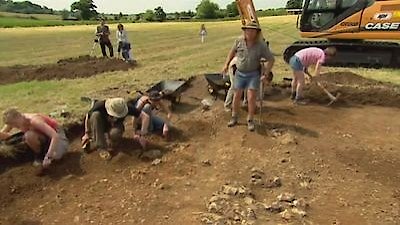
The team, led by Tony Robinson, starts things off with a walk around the site in order to get a better understanding of the area's history and topography. They then begin their excavation in different areas, including the supposed site of the original Roman temple, which has been lost to history.
The team also uncovers evidence of the Saxon era, which suggests that the site was used by people from different backgrounds over the centuries. There are also indications that the area could have been used for ritualistic practices during the Iron Age.
The team uncovers a large amount of pottery and other artifacts, which they analyze in order to piece together the history of the site. Through their findings, they discover that the temple was constructed in two phases, with the first phase being built during the reign of Emperor Vespasian in the 1st century AD and the second phase being constructed under the rule of Emperor Constantine I in the 4th century AD.
As the team progresses with their excavation, the weather takes a turn for the worse, adding a level of difficulty to their work. They continue, however, never giving up on their search for further answers.
Finally, after analyzing their findings, the team comes to a conclusion about the history of the site. Their work has revealed a long and complex history, with many different groups of people using the area for different purposes throughout the centuries. Despite the obstacles they faced along the way, the team was able to paint a vivid picture of the site's past, demonstrating that the past truly is alive, and that it can be found in the most unexpected places.