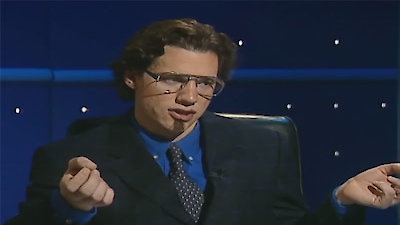
Brass Eye Season 1 Episode 5 Crime
- February 19, 2011
- 24 min
-
8.3 (45)
Brass Eye’s fifth episode, titled Crime, delves into the complexities and absurdities surrounding the media's portrayal of criminality, societal fears regarding crime, and the sensationalism that often accompanies these narratives. As with previous episodes of the series, it employs a satirical lens to explore a serious topic, cleverly mixing humor with hard-hitting commentary.
In Crime, the narrative unfolds as the host, the unmistakably provocative Chris Morris, guides viewers through various facets of crime in contemporary Britain. The episode does not shy away from discussing both petty crime and more severe offenses, ultimately questioning the societal constructs that shape public perception of criminal acts. With a mix of mock-seriousness and absurdity, the episode interrogates numerous themes, including the morality of law enforcement, media hysteria, and the public's fascination with crime stories.
Throughout the episode, viewers encounter a variety of interviews and segments featuring exaggerated representations of police officers, experts, and ordinary citizens. The absurdity of their statements often highlights the ridiculousness of public discourse surrounding crime. Morris deftly balances the line between real concern and farce, showcasing the often-unseen absurdities of crime prevention measures and the disproportionate fears that permeate society.
One of the standout features of the episode is its use of fictional case studies that parody real-life scenarios and incidents. These segments effectively illustrate how easily public perception can be manipulated by sensationalized stories propagated through media outlets. Audiences may find themselves both laughing and cringing as they recognize the ridiculous nature of some of the claims made by the participants, shedding light on how crime reports can warp public understanding and foster unwarranted panic.
Moreover, Crime also touches on the underlying social issues linked to criminality, such as poverty, mental health, and systemic inequality. By exposing the root causes of criminal behaviors, the episode encourages viewers to think critically about the narratives they consume. It challenges the viewer to consider who gets labeled as a criminal and why, as well as the repercussions of this labeling on individuals and communities.
Throughout the program, Morris employs a range of stylistic techniques typical of Brass Eye, including cheeky cutaways, deliberately misleading graphics, and a tone that oscillates between playful and severe. This approach serves to heighten the comedic elements while forcing viewers to grapple with the seriousness of the subject matter. The tonal shifts engage the audience in a dialogue about crime and morality, ultimately pushing them to scrutinize their views on these subjects.
The episode also features various examples of bizarre felony cases and media hype, ensuring that the material remains fresh and engaging. The interplay between fact and fiction is masterfully executed, with Morris presenting absurd, outlandish claims that, while exaggerated, resonate with real-life instances of media reporting gone awry.
As the episode unfolds, an array of colorful characters appears, each contributing to the narrative’s tapestry. Their exaggerated mannerisms and outrageous statements serve as a critique of the archetypes often found in crime stories—be it the hardened criminal, the overzealous cop, or the melodramatic victim. By poking fun at these caricatures, Brass Eye underscores the failure of traditional media to provide genuine insight into crime and its societal implications.
The culmination of these elements results in a thought-provoking episode that is as entertaining as it is challenging. Crime invites viewers to reflect on their own perceptions of crime, urging them to question the integrity of the sources from which they derive their understanding. The controversial and unsettling nature of the content ensures that discussions will linger long after the credits roll, leaving audiences to ponder the nuances of crime and the media's perilous power in shaping public opinion.
In summary, Crime is an incisive and humorous take on the oft-sensationalized topic of criminality. With a signature mix of sharp satire, absurdity, and genuine insight, this episode of Brass Eye serves as a reminder of the critical importance of questioning the narratives that dominate societal views on crime. It encapsulates the essence of the series as it tackles complex issues while maintaining a distinctly irreverent tone. As viewers navigate the intricate web of entertainment, farce, and commentary presented in this episode, they are bound to encounter moments that provoke laughter, reflection, and perhaps a bit of discomfort, making it a standout installment in the Brass Eye anthology.