National Geographic Explorer Season 5 Episode 11 Inside Guantanamo
- April 5, 2009
National Geographic Explorer season 5, episode 11 takes audiences inside one of the most controversial detention centers in modern history. "Inside Guantanamo" explores the infamous Camp Delta, a prison located on the southeastern tip of Cuba. The prison was established in 2002 and has been a centre of controversy from the moment it was created. It became the first detention centre operated by the United States, solely for the purpose of housing suspected terrorists. This episode of National Geographic Explorer sets out to explore what life is really like for the detainees and the guards.
"Inside Guantanamo" begins by examining the history of the detention center, including the events that led up to its creation. Profiling the very first detainees, the documentary shines a light on the men who were accused of being terrorists and the evidence that was presented against them. Many have pointed out that the evidence against some of these men was often flimsy, hearsay, or outright fabricated. The episode also considers the circumstances that allowed the United States to justify keeping suspects in legal limbo, without charging them with a crime or providing them with a legal defense.
The episode's spotlight shifts to the daily lives of prisoners and their interactions with those in charge of their confinement. Cameras take us through the facility, showing us the cells of the detainees, the mess hall, and interrogation rooms. Interviews with former prisoners give a rare insight into prison life, detailing the smallest of actions that could result in punishment. Examples of such actions include not standing up when a guard enters the cell, not wearing a hat in the outdoor areas, and not being able to recite the Quran.
National Geographic Explorer also explores the techniques used during interrogations and the impact they can have on detainees. The episode profiles an American interrogator who worked at the detention center, revealing the psychological tactics used to obtain information. They include techniques such as sleep deprivation, sensory or temperature deprivation, waterboarding, and the use of snarling dogs.
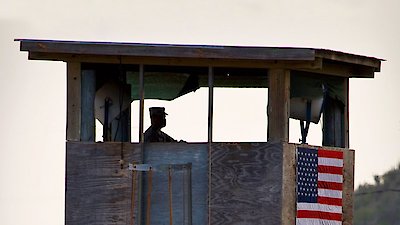
The documentary also examines the perspective of the guards that were responsible for the care and keeping of the detainees. It focuses on the training they underwent before being deployed to Guantanamo Bay and how they were tasked with the prison's mission. The documentary interviews former soldiers who were a part of the facility and what they witnessed during their times. In many cases, the isolation and mental stress of such work took a heavy toll. They reveal the challenges they faced and the morality struggles they had to come to grips with.
The episode concludes by examining the future of Guantanamo Bay and whether there is any hope of closing the facility. As of its release (and even to this day), the detention center was still functional and in use. The documentary notes that the institution is the enduring legacy of one of the most polarizing periods in American history, and that its continued existence represents a stubborn refusal on behalf of the U.S. government to engage with its darker aspects.
In summary, National Geographic Explorer's "Inside Guantanamo" is a thought-provoking and illuminating episode that provides a rare insight into one of the most secret detention centers in the world. Through interviews with former inmates, interrogators and guards, the documentary paints a complex picture of life inside the prison and unpicks the moral complexities of this institution's continued existence. It is a must-watch for anyone interested in human rights, the war on terror or the broader world of international politics.