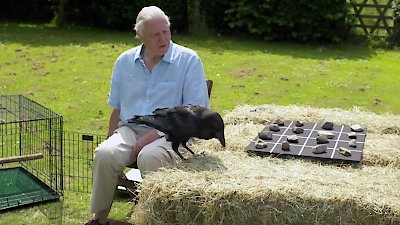
David Attenborough's Natural Curiosities Season 3 Episode 2 Curious Minds
- February 9, 2015
- 22 min
-
8.5 (37)
David Attenborough's Natural Curiosities is a BBC documentary series that explores the fascinating and unexpected ways in which animals have evolved to survive and thrive in their environments. In each episode, Attenborough investigates two species of animals that share a particular natural curiosity or adaptation.
Season 3 episode 2, "Curious Minds," features two animals that are known for their exceptional intelligence: the raven and the baboon. Despite their vastly different appearances and lifestyles, both of these animals have developed remarkable problem-solving abilities and social behaviors that make them stand out from their peers.
First up, Attenborough takes us into the world of the raven. Found throughout the Northern Hemisphere, these black birds are often associated with mystery and folklore. But as Attenborough shows us, there's more to ravens than meets the eye. These birds are not only highly adaptable and skilled at scavenging, but they also have a remarkable ability to use tools.
Attenborough introduces us to a group of ravens in Austria that have learned how to crack open nuts using a complex process that involves dropping the nuts from great heights onto rocks. This behavior, known as "percussive foraging," requires both physical dexterity and cognitive flexibility. Attenborough explains that ravens have some of the largest brains relative to their body size of any bird species, which may explain why they are so adept at tool use.
Next, we learn about the complex social behaviors that make baboons such fascinating creatures. Attenborough visits a troop of chacma baboons in South Africa, where he observes how these primates navigate their complex social hierarchies. Baboons have a highly structured society in which individuals compete for status and resources, but they also display remarkable empathy and social intelligence.
Attenborough shows us how baboons use a variety of vocalizations and physical gestures to communicate with one another, including a specific call that warns others of potential danger. He also introduces us to a group of baboons that have learned how to use a team-based approach to access a source of underground water. Using their powerful jaws and sharp teeth, the baboons are able to dig deep into the ground to reach the water below, but they must coordinate their efforts carefully to avoid injury.
Throughout the episode, Attenborough highlights the amazing adaptability and ingenuity of these animals, as well as the ways in which human behavior is impacting their survival. He underscores the importance of protecting these remarkable creatures and their habitats, so that they can continue to thrive and evolve in the years to come.
Overall, "Curious Minds" is a fascinating look at two very different species of animals that share a common trait: exceptional intelligence and adaptability. Attenborough's narration is as engaging and informative as ever, taking viewers on a journey into the complex world of these curious and clever creatures.
