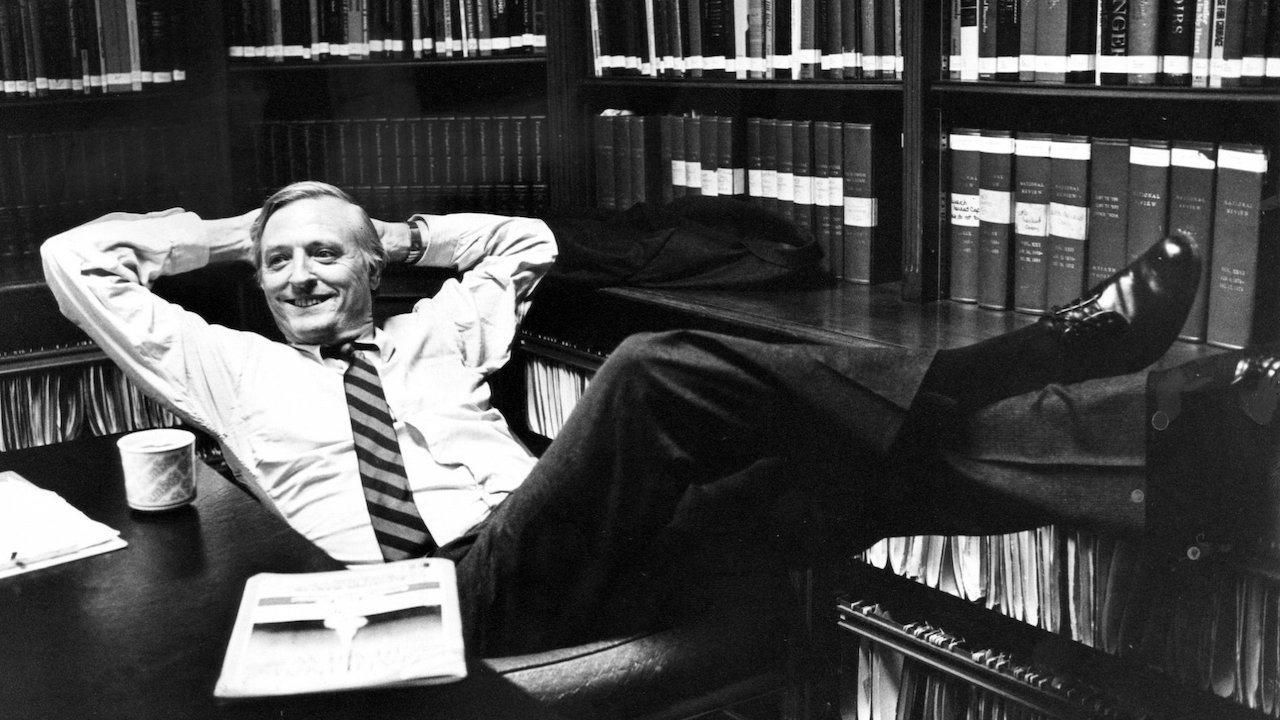
Firing Line Season 7 Episode 35 Christianity and Capitalism
- November 2, 1972
In this episode of Firing Line, host William F. Buckley Jr. explores the intersection of Christianity and capitalism. The discussion is timely as the Reagan administration is implementing policies that reflect a belief in the free market and the power of the individual. Buckley's guests include Rev. Richard John Neuhaus, a Catholic priest and founder of the journal First Things, and Michael Novak, a philosopher and author of the book The Spirit of Democratic Capitalism.
Buckley begins the conversation by asking whether capitalism is compatible with the teachings of Christianity. Rev. Neuhaus argues that capitalism and Christianity are not inherently compatible, as capitalism places primacy on the individual and profit seeking, while Christianity emphasizes the importance of community and the common good. However, he notes that capitalism can be moderated and balanced through government regulation and social safety nets, which help to ensure that the market is working for the benefit of all.
Novak, on the other hand, believes that Christianity and capitalism are not only compatible, but that they are the only economic system that is truly grounded in Christian values. He argues that capitalism encourages individuals to take responsibility for their own lives and to be good stewards of their resources, which are core Christian values. Novak also notes that capitalism has lifted millions of people out of poverty and has created wealth that can be used for charitable purposes.
The conversation turns to the role of the government in regulating the market. Rev. Neuhaus argues that government regulation is necessary in order to prevent the excesses of capitalism and to ensure that the market is working for the common good. He notes that capitalism can create inequality and that government intervention can help to balance the scales.
Novak, however, believes that too much government regulation can stifle innovation and creativity, which are essential to a healthy economy. He notes that capitalism is self-correcting and that market forces will naturally correct for excesses and abuses.
Buckley then asks the guests about the morality of profit seeking. Rev. Neuhaus argues that profit seeking must be balanced against the needs of the community and the common good. He notes that while it is not inherently immoral to seek profit, it is immoral to do so at the expense of others.
Novak agrees that profit seeking must be balanced, but he argues that profit is not inherently immoral. He notes that profit is simply a measure of how well a business is serving its customers, and that businesses that make a profit are better able to serve their customers and contribute to society.
The conversation then turns to the role of charity in a capitalist society. Rev. Neuhaus argues that charity is necessary in order to address the needs of those who are left behind by the market. He notes that the government has a role in ensuring that the most vulnerable members of society are protected.
Novak agrees that charity is important, but he argues that charity is most effective when it is voluntary. He notes that capitalism creates wealth that can be used for charitable purposes, and that individuals and businesses should be encouraged to give back to their communities.
The episode concludes with a discussion of the larger philosophical questions at the heart of the debate between capitalism and Christianity. Rev. Neuhaus argues that the debate reflects a tension between the individual and the community, and that it is ultimately a question of which values should take priority.
Novak argues that the debate is ultimately about freedom – the freedom of the individual to make choices and to pursue happiness. He notes that capitalism is the best economic system for promoting freedom and for ensuring that individuals have the opportunity to succeed.
Overall, this episode of Firing Line is a thoughtful and thought-provoking exploration of the relationship between Christianity and capitalism. While the guests do not always agree, they engage in a respectful and informative dialogue that sheds light on one of the most important debates in modern economics.
