Inside the Factory Season 1 Episode 1 Bread
- May 5, 2015
- 44 min
Inside the Factory is a TV documentary series that takes viewers on a journey to understand the process of different factories that produce everyday items. In season 1's episode 1 titled "Bread," the show takes viewers through the process of making bread, from the initial ingredients to the final product.
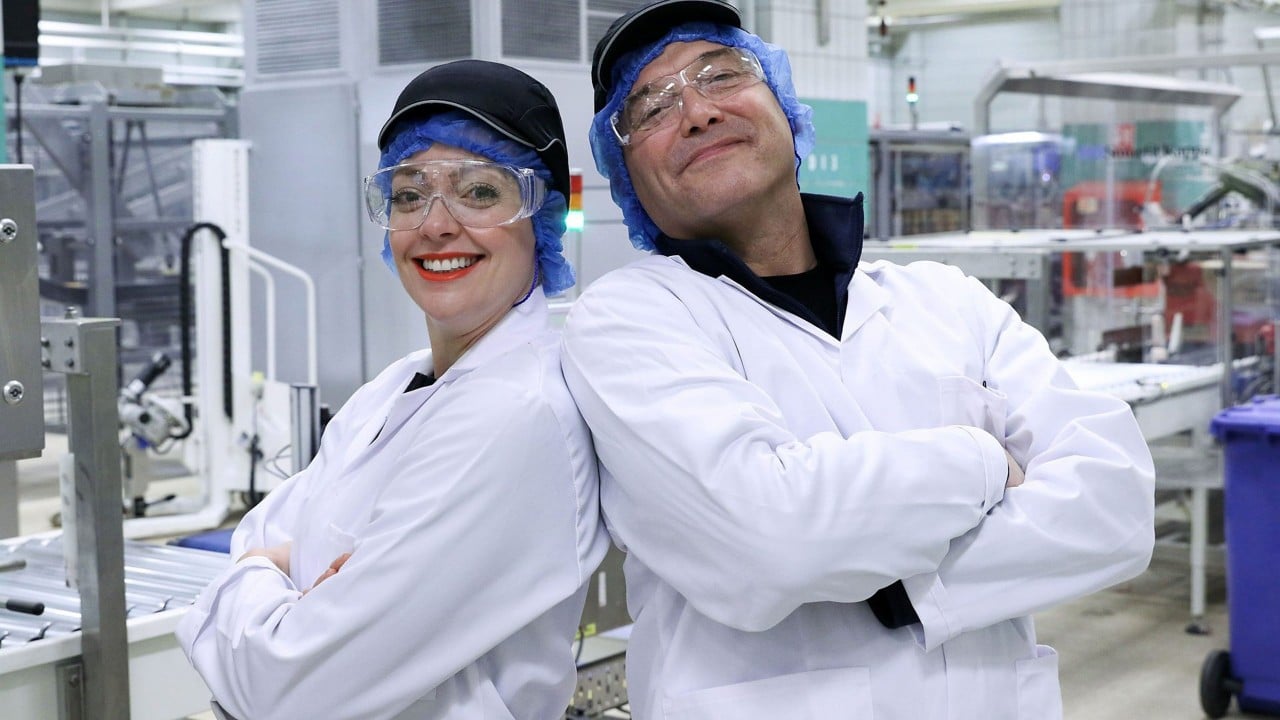
The episode begins by introducing the presenter, Gregg Wallace, who is a food expert, and Cherry Healey, a food critic. They take the viewers to one of the largest bread factories in the UK, which produces thousands of loaves of bread every day. The objective of the episode is to discover how this factory manages to make such large quantities of bread while maintaining the consistent quality standards.
The process of making bread is divided into two categories: 'Craft Loaf' and 'Sliced Loaf.' The two types require different processes and ingredients. Gregg and Cherry start by visiting the 'Craft Loaf' section, where they witness the process of making artisan bread that is still hand-made. They observe the bakers using traditional techniques to make sourdough bread and various types of bread rolls- from the mixing of the ingredients to the final baking process. The viewers get to see the kneading and proving process of the bread, the shaping of the rolls, and finally, the baking on stone ovens. The traditional bread-making methods are seen in stark comparison to the modern factory methods, with a stark contrast shown between the two methods of making bread.
Next, they move to the 'Sliced Loaf' section, where they observe the process of making bread that is mass-produced, and the focus is on precision and consistency. The main ingredients for a sliced loaf are flour, yeast, water, salt, preservatives, and enhancers. They then introduce the viewers to a giant mixing machine, which mixes all the ingredients precisely to create the dough. This machine can make dough for up to 500 loaves of bread in one batch. They then proceed to introduce the viewers to an automatic cutting and blocking machine that divides the dough into equal-sized portions. The portions then go through a shaping process in which the dough is laid out in tins, ensuring they have an even amount of dough.
Viewers are introduced to the different options for bread that customers have, including "medium," "thick," or "thin" sliced bread. The team then explores the baking process, which is the most critical process of the factory. They take the viewers to see the high-tech ovens in which the bread is baked. These ovens are so automated that they can regulate the heat and humidity levels inside the oven automatically, ensuring that the bread is baked correctly every time. After baking, the bread goes through the cooling conveyor, which reduces heat before the loaf gets sliced.
The show does a fascinating job of breaking down the science behind the bread baking process, from how yeast works and the importance of water levels to the reason that enzymes are added to the dough for consistent texture. Bread is not only an essential food for many people, but it also has an intricate history that has evolved over the centuries. The episode delves into that history, showing viewers how white bread was once considered the luxury option, and brown bread was the cheaper alternative.
Towards the end of the episode, viewers get to see how the factory packs the bread, with a staggering 36,000 loaves packed per hour. The packaging process ensures that the bread stays fresh for as long as possible with air-wrapping and vacuum packing used to protect the bread. Cherry and Gregg end the show by going through the different types of bread available in the supermarket, showing the various additives and preservatives included in some of the bread.
Overall, Inside the Factory season 1 episode 1 provides viewers with an inside look into a bread factory and helps them understand how bread is made. The episode shows how the factory balances traditional art with modern technology and science to produce mass quantities of bread while maintaining consistent quality standards. The episode is informative and entertaining, with a perfect balance of insight and education, making it well worth watching for anyone interested in bread making, whether at an industrial scale or in their own kitchens.
