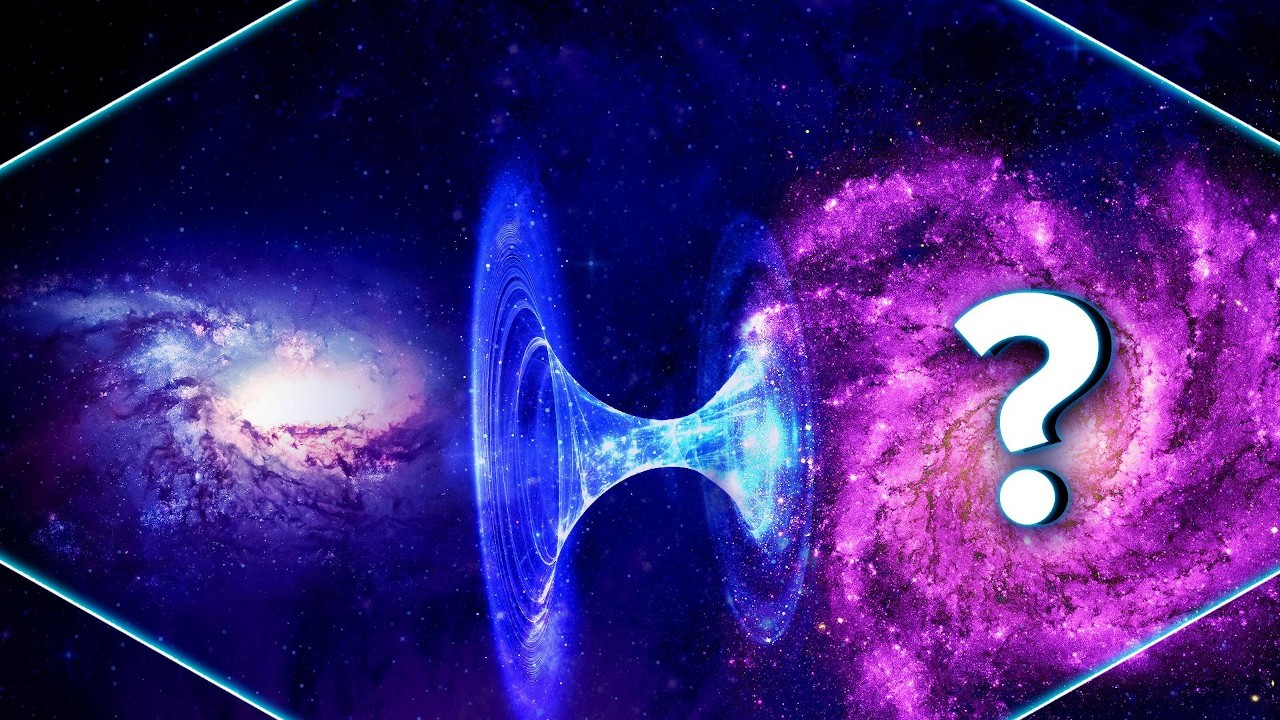
PBS Space Time Season 2015 Episode 37 Is the Alcubierre Warp Drive Possible?
- October 28, 2015
Is the Alcubierre Warp Drive Possible? - that's the question explored in this episode of PBS Space Time, season 2015 episode 37. The Alcubierre Warp Drive is a theoretical concept which could hypothetically allow for faster-than-light travel. Named after physicist Miguel Alcubierre who first proposed the idea in 1994, the Alcubierre Warp Drive suggests that a spacecraft could warp spacetime in order to travel faster than the speed of light, without actually moving through space.
Hosted by astrophysicist Matt O'Dowd, this episode delves into the science behind the Alcubierre Warp Drive and explores the possibility of it ever becoming a reality. The episode begins by providing a brief history of faster-than-light travel, noting that the idea has been a staple of science fiction for decades. O'Dowd then introduces the Alcubierre Warp Drive and explains the concept in detail.
The Alcubierre Warp Drive relies on a fundamental concept of Einstein's theory of general relativity - that mass and energy warp spacetime. This warping creates gravity, and it's the reason why objects are pulled towards each other. The Alcubierre Warp Drive, however, proposes that a spacecraft could warp spacetime in such a way that it moves space in front of it and behind it, while remaining stationary.
To achieve this, the spacecraft would need to create a bubble of negative energy around itself. Negative energy has never been observed in nature, but scientists have theorized that it could be possible. The negative energy would cause spacetime in front of the spacecraft to contract and behind it to expand, essentially creating a wave that the spacecraft could ride. This wave would allow the spacecraft to travel faster than the speed of light without breaking any laws of physics.
The episode then explores the many challenges that would need to be overcome in order to create the Alcubierre Warp Drive. One of the biggest challenges is creating the negative energy required to warp spacetime. Negative energy has never been observed in nature, and the current theories for creating it would require an enormous amount of energy - far more than any current technology is capable of producing.
Another challenge is the amount of energy required to create the bubble of negative energy itself. Up until 2012, scientists believed that the amount of energy required would be equivalent to the mass of Jupiter. However, recent calculations by Alcubierre himself have suggested that the energy requirement could be significantly lower - although still far beyond what current technology is capable of producing.
Finally, the episode explores some of the potential consequences of the Alcubierre Warp Drive. For example, the spacecraft would essentially be creating its own frame of reference, meaning time would pass differently inside the bubble than outside of it. This could create a time difference between the spacecraft and anywhere it travels to. Additionally, the energy required to create the warp bubble could have catastrophic consequences for anything in the vicinity of the spaceship.
In conclusion, PBS Space Time season 2015 episode 37, Is the Alcubierre Warp Drive Possible?, provides an in-depth exploration of this fascinating and complex topic. While the Alcubierre Warp Drive remains firmly in the realm of science fiction at present, the episode provides a thoughtful and engaging discussion of the theoretical concepts behind it and the challenges that would need to be overcome to make it a reality. Overall, it's a must-watch for anyone interested in the possibility of faster-than-light travel and the cutting-edge science of astrophysics.
