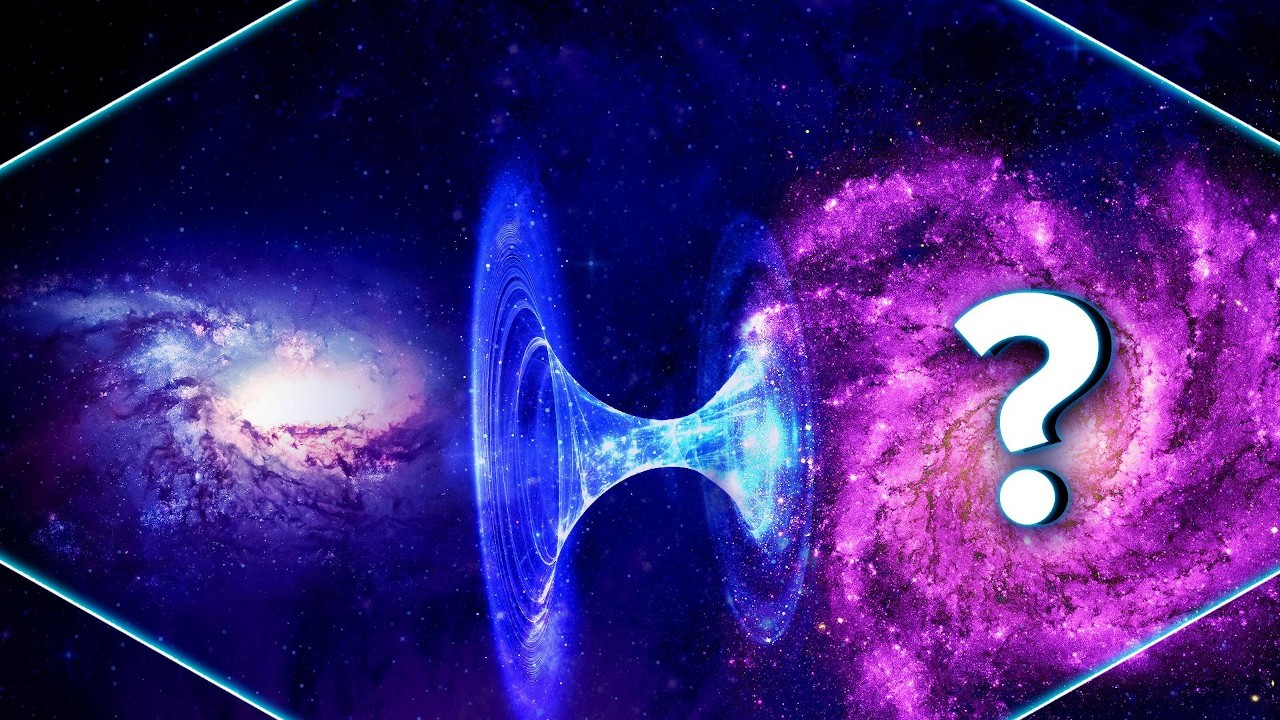
PBS Space Time Season 2021 Episode 5 Gravitational Wave Background Discovered?
- February 17, 2021
PBS Space Time is back with another exciting episode to blow your mind. In Season 2021 Episode 5, the show explores the recent discovery of the Gravitational Wave Background. If you're not aware of what gravitational waves are, let me give you a brief introduction. Gravitational waves are ripples in the fabric of space-time that propagate outward from their source at the speed of light, similar to how a stone thrown into a pond generates ripples spreading out.
Gravitational waves were first predicted by Albert Einstein's theory of general relativity over a century ago. However, it was only in 2015 that they were detected for the first time by the Laser Interferometer Gravitational-Wave Observatory (LIGO), a revolutionary project that won the 2017 Nobel Prize in Physics. Since then, several gravitational wave detections have been made that have opened up new avenues for studying the universe.
In this episode, the host explains how scientists have now discovered the Gravitational Wave Background. The Gravitational Wave Background is a vast and diffuse signal of gravitational waves in the universe that originates from every point in the sky and spans the entire history of the universe. The Gravitational Wave Background is akin to cosmic white noise, much like the Cosmic Microwave Background radiation that resulted from the Big Bang.
The discovery of the Gravitational Wave Background represents a major milestone in our understanding of the universe. It provides new insights into the earliest moments of the universe and the violent processes that have occurred since then, such as the mergers of black holes and neutron stars.
The episode delves into the science behind the discovery of the Gravitational Wave Background, explaining how the signal was detected. It talks about the two primary methods that scientists used to detect and measure the Gravitational Wave Background - the cross-correlation method and the stacking method. The show dives deep into the technical details of these techniques, explaining how they work, and how they were used to extract the faint Gravitational Wave Background signal from the noise.
While the discovery of the Gravitational Wave Background is a fantastic achievement, the work is far from over. The show covers the future prospects of this research and how scientists are planning to improve their methods to detect and study the Gravitational Wave Background. This includes the development of new gravitational wave observatories such as the European Gravitational Observatory's Einstein Telescope and the Laser Interferometer Space Antenna (LISA) - a space-based observatory scheduled for launch in 2034.
The show also discusses the implications of the Gravitational Wave Background for various scientific fields such as astrophysics, cosmology, and particle physics. It highlights how the study of gravitational waves is a unique tool to test Einstein's theory of general relativity, understand the properties of black holes and neutron stars, and explore the nature of the universe's dark matter and dark energy.
Overall, Season 2021 Episode 5 of PBS Space Time is a fascinating exploration of the Gravitational Wave Background discovery. The show masterfully combines scientific rigor with accessible language, making it an enjoyable and informative experience for all viewers interested in the latest findings in astrophysics. So, go ahead and check out the episode - it's sure to be worth your time.