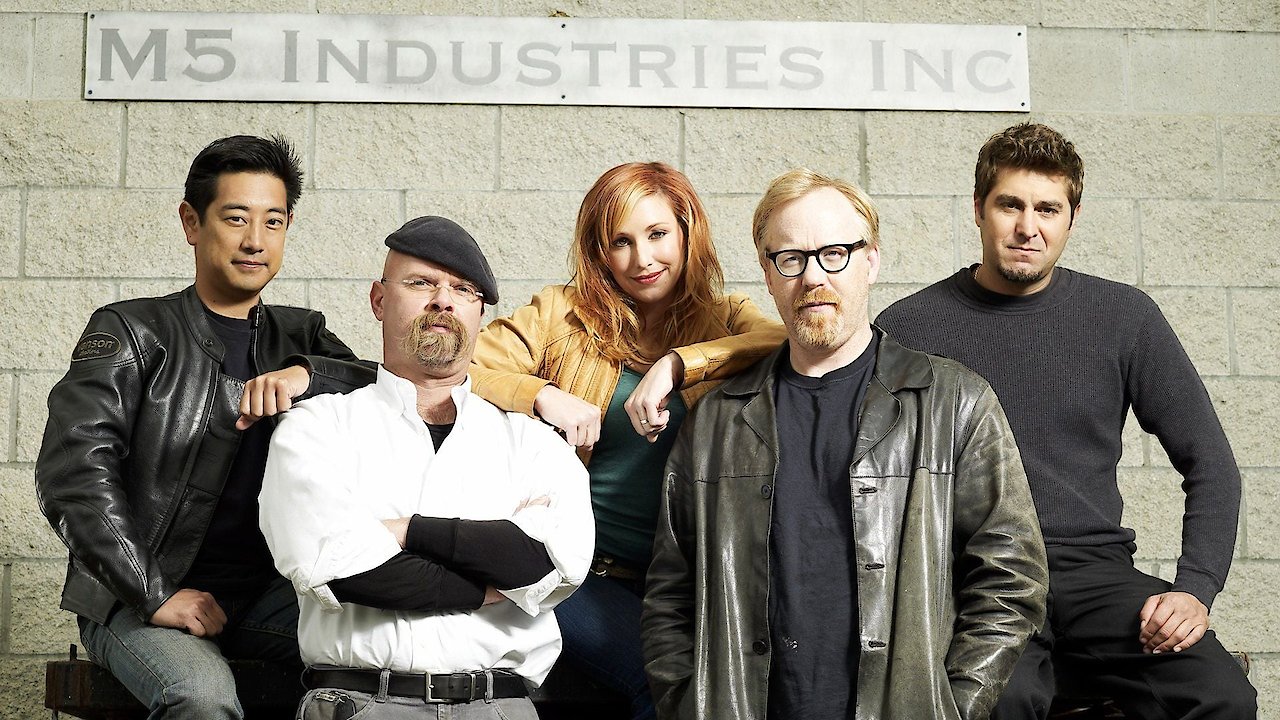
MythBusters Season 7 Episode 36 Green Screen Special: Destination Science
- November 9, 2011
- 49 min
In this episode of MythBusters season 7, titled "Green Screen Special: Destination Science," the team experiments with the use of green screens in movies and television shows. Using their own Hollywood filming studio, they test various myths about what can and cannot be achieved with green screen technology.
The first myth they tackle is the idea that anything can be achieved in front of a green screen. To test this, they create their own green screen set and attempt to film typical outdoor scenes such as flying a helicopter over a city skyline. However, they quickly discover that the lighting conditions and camera angles must be perfect to make this type of illusion work.
Next, they attempt to test the myth that actors can seamlessly interact with CGI characters on a green screen stage. To do this, they create a scene with a green screen elephant and have one of their team members interact with it. They find that while it may be easy to film the actor, it is much more challenging to get the CGI elephant to move in a realistic manner.
The third myth they test is whether or not having a green screen present during filming can be distracting to the actors. To test this, they have their team members act out a scene in front of a green screen and then a real set. They find that while some actors may find the green screen distracting at first, they quickly adapt to it and are able to deliver their lines just as convincingly.
Continuing their experimentation with green screen technology, the team then explores the myth that green screen technology can be used to create entire worlds. To test this, they create a scene in which one of their team members walks through a door and onto a moving green screen. They then project a pre-filmed scene around the green screen to create the illusion of a complete world. However, they find that the green screen must be perfectly aligned with the pre-filmed footage in order for the illusion to work.
Lastly, the team explores the myth that green screen technology can be used to fake stunts and action scenes. To test this, they use a green screen stage to film a high-speed car chase and a sequence involving jumping out of a building. They then replace the green screen with pre-filmed footage to create the final scene. While they are successful in creating the illusion of a high-speed car chase, they find it more difficult to create the illusion of jumping out of a building due to the need for realistic camera angles and special effects.
In conclusion, "Green Screen Special: Destination Science" provides fun and intriguing insight into the use of green screens in the entertainment industry. By testing various myths about green screens, the MythBusters team uncovers the challenges and opportunities of this technology and its role in creating believable on-screen illusions.
