PBS Space Time Season 2017 Episode 31 White Holes
- August 30, 2017
In season 2017 episode 31 of PBS Space Time, the focus is on a fascinating theoretical concept: white holes. While most people are familiar with black holes and their ability to trap and engulf everything in their vicinity, white holes are a lot less well-known. In theory, white holes are the exact opposite of black holes. They are objects that only spew out matter and energy, rather than drawing everything inwards.
In the episode, the narrator explains that white holes are purely hypothetical objects. They have not been observed in real life and are simply a prediction made by physics theory. However, this does not mean that they are not worth exploring. In fact, studying white holes could help physicists understand some of the most fundamental mysteries of the universe.
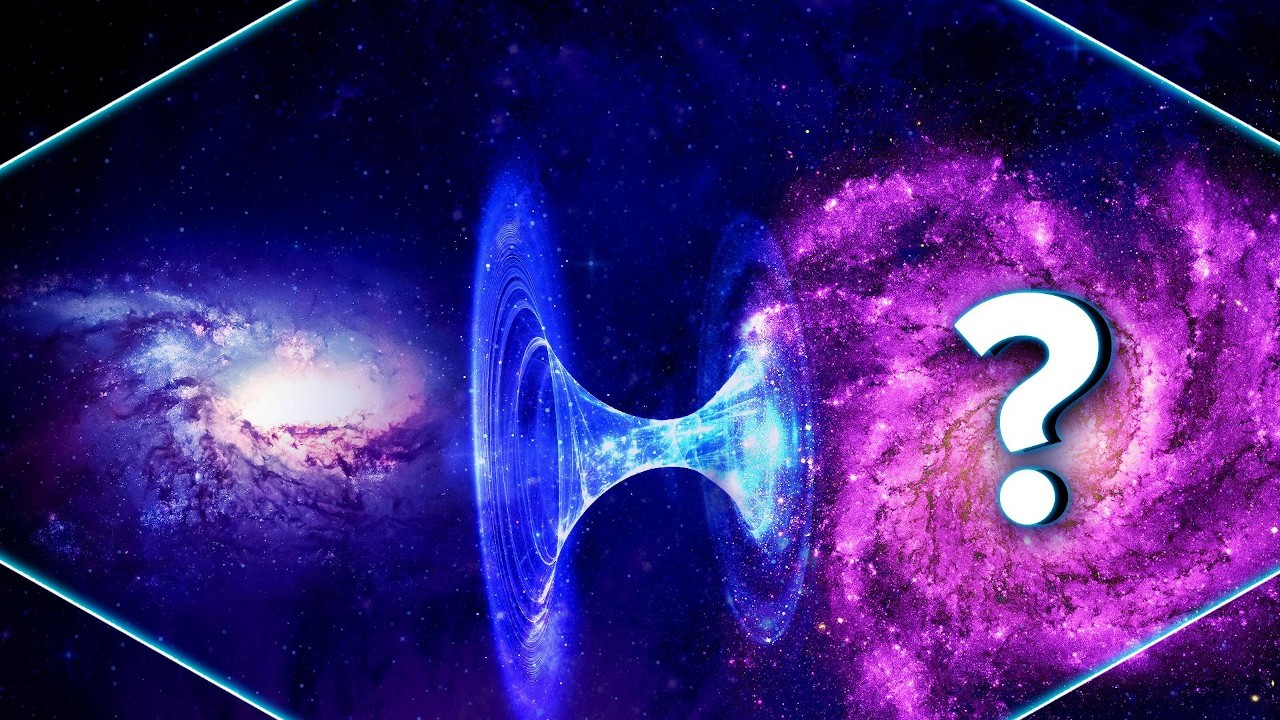
One of the main topics discussed in the episode is the relationship between black holes and white holes. According to the theory, a black hole and a white hole are connected by what is known as an Einstein-Rosen bridge, or a wormhole. This means that if you were to cross the event horizon of a black hole, you might actually end up exiting out of a white hole on the other side.
The episode also explores the idea that white holes could be related to the Big Bang. The Big Bang is the current leading explanation for how the universe began, but there are still many unanswered questions about this event. For example, scientists do not know what happened in the first few moments after the Big Bang, or what caused it in the first place. Some physicists have suggested that a white hole could have been responsible for the Big Bang, and that the universe is actually emerging from this white hole.
All of this might sound a little far-fetched, but the narrator explains that the theory behind white holes is actually quite solid. The concept of a white hole is based on a set of equations known as the Hawking-Hayward Wormhole Theory. These equations describe how matter and energy might be able to flow through a wormhole, and suggest that white holes are a natural consequence of this process.
The episode also discusses some of the more practical implications of white holes, should they be discovered in the future. For example, if white holes are real, they could potentially be used as a source of energy. White holes are constantly spewing out matter and energy, so capturing this energy could be a new and powerful way to generate electricity.
Overall, this episode of PBS Space Time is a fascinating exploration of one of the most intriguing concepts in theoretical physics. While white holes are purely hypothetical at this point, they could hold the key to understanding some of the deepest mysteries of the universe. The episode is accessible to a wide range of viewers, whether you have a background in physics or are simply interested in learning more about the universe we live in.