Qi Season 1 Episode 2 Astronomy
- March 3, 2014
-
8.0 (157)
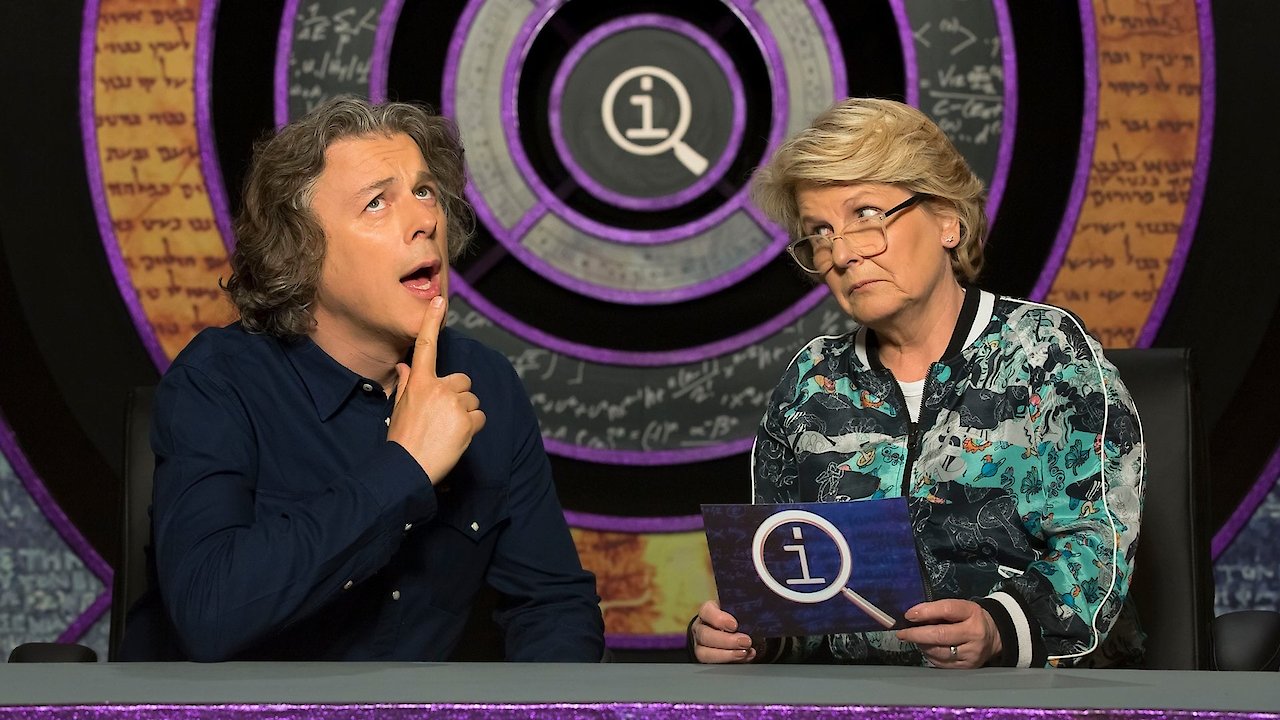
In the second episode of QI's first season, the topic on hand is Astronomy. The show kicks off with the host, Stephen Fry, introducing the panellists to the show which includes Bill Bailey, Phill Jupitus, Rich Hall and Alan Davies.
The show begins with Bill Bailey talking about the planet Venus. He describes Venus as "a bit of a tearaway" and points out that it's the hottest planet in our solar system. On the other hand, Alan Davies argued that Earth could also be the hottest planet as it feels the hottest to the human body. Stephen intervened and explained that temperature is a measure of energy. Therefore, Venus is the hottest planet.
Phill Jupitus brought up the topic of asteroids and how their names are given to them. Stephen explained that asteroids are named based on a set of guidelines given by the International Astronomical Union (IAU). He also added that it's the same process through which planets are named.
Stephen then broadcasts a short clip of a group of scientists who have created an orchestra of planets. This orchestra is based on the idea that each planet orbits the sun and creates a unique note. Stephen introduces the panellists to a recording of this orchestra, and they all share their thoughts on the final result.
Bill Bailey then sets off on to talk about how Galileo discovered the moons of Jupiter. The moons were being pulled into orbit by Jupiter, and this gave Galileo insight into how gravity worked. After a short discussion, Stephen introduces the panel to the phrase "the lesser of two evils" and has them guess where it came from. It turns out that it comes from a quote by Cicero meaning "the smaller of two risks."
Alan Davies then goes into the topic of what ancient civilisations thought about the stars. He mentions how the ancient Greeks used to believe that the stars were Gods. Stephen elaborates on this by saying that the Greeks believed that the stars were Gods who had been turned into stars by the gods. This, Stephen explains, was because the stars were so far away that they looked like they were hanging in the sky.
Rich Hall then raises the topic of comets and how they have been viewed throughout history. The Egyptians, for instance, saw comets as a sign of a good harvest, while in Europe, they were thought to be intruders from another world. Stephen then brings up the topic of Halley's Comet and its various sightings throughout history.
The show then moves on to the topic of the universe and what it's expanding into. Stephen explains that the universe isn't expanding into anything. It's just expanding, and there's nothing beyond it. Bill Bailey adds that the universe could be like a balloon, where the space inside is expanding, but there's nothing outside of it.
As the show draws to an end, Phill Jupitus talks about how we measure distance in space. He mentions the light-year, which is the distance that light travels in a year. Stephen then moves on to a question that divides the audience - is Pluto a planet or not?
The show ends with a fun round where the panellists have to guess the size of the sun. The guesses range from the absurd to the more accurate. However, the answer is revealed to be around 109 times the size of the earth.
In conclusion, QI's second episode of the first season, Astronomy, is packed full of educational and entertaining facts about the universe. The panellists provide entertaining inputs while Stephen Fry does an excellent job of asking thought-provoking questions about the vast expanse of space. This episode is a must-watch for anyone interested in astronomy.