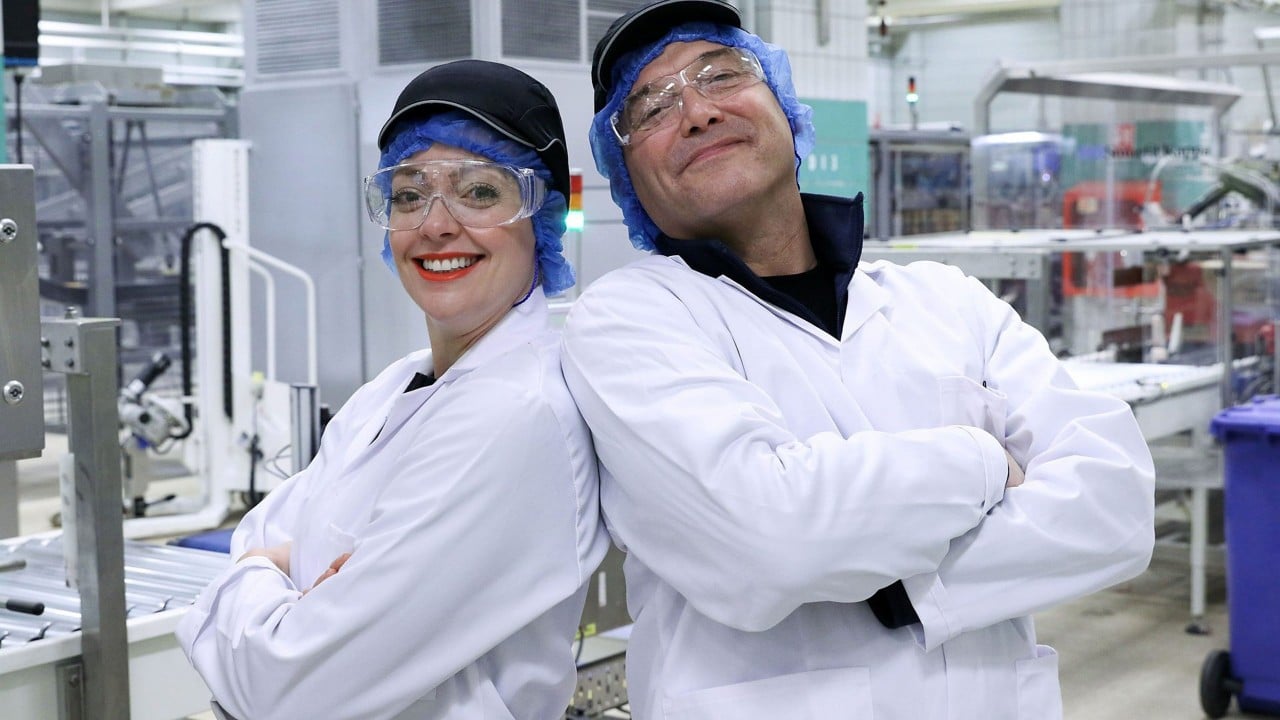
Inside the Factory Season 4 Episode 6 Pencils
- March 19, 2019
- 44 min
Inside the Factory is a television show that explores how our everyday objects are made. In the fourth season's sixth episode, viewers are given an in-depth look into the manufacturing process of the seemingly simple object, pencils.
The episode begins with presenter Gregg Wallace visiting the Derwent Pencil Factory in Cumbria, England, one of the oldest and most well-known pencil factories in the world. Wallace is a chef by trade, but has become a regular presenter on the show due to his enthusiasm and inquisitive nature.
Wallace meets with Chris Collier, the production manager at Derwent Pencil, and together they explore the factory floor, starting with the production of the pencil's lead. Wallace is fascinated to learn that the lead of a pencil is made up of a mix of graphite and clay. The exact mix is closely guarded by Derwent Pencil, but they reveal that the properties of the lead changes depending on the proportions of graphite and clay used. For example, a sketching pencil has a higher proportion of graphite, which gives it a darker lead, while an ordinary pencil has more clay, making it harder and less prone to breaking.
Next, Wallace and Collier watch as the lead is encased in wood. Derwent Pencil uses sustainably sourced cedarwood, as it is easy to sharpen and glides smoothly across paper. The wood is cut into pencil blanks, which are then sprayed with adhesive to help the lead stick. The lead is inserted into the center of the blank and then the two are fused together through a process called steaming. Wallace is amazed to see how the heat and moisture cause the wood to expand and fit tightly around the lead.
The newly formed pencil then moves onto the next section of the factory, where it undergoes a series of tests to ensure its quality. Derwent Pencil tests each pencil's weight, length, and straightness. Only the pencils that pass the tests are then painted and labeled with their respective grades.
Throughout the episode, Wallace introduces interesting facts and provides historical context around the pencil. For example, viewers learn that the first pencils were invented in the 16th century, but they were not the same as the ones we use today. Early pencils were made of a piece of graphite wrapped in string or sheepskin, which was messy and inefficient. Over time, a need for a more practical and efficient writing tool emerged, and thus, the modern pencil was born.
Wallace also explores the cultural significance of pencils. The episode shows how pencils have been used in various professions, such as architecture, art, and writing. Pencils even have a place in space travel, as they were used to write and draw during Apollo missions.
The episode concludes with Wallace reflecting on the humble pencil's lasting legacy and versatility. He says that despite the rise of digital technology, there will always be a place for pencils in our lives. Whether it be for doodling, writing, or creating art, the pencil remains a simple yet essential tool.
Overall, Inside the Factory's Pencils episode provides an engaging and informative look into a seemingly mundane object. The combination of historical context, manufacturing process, and cultural significance make for an interesting and educational viewing experience.
