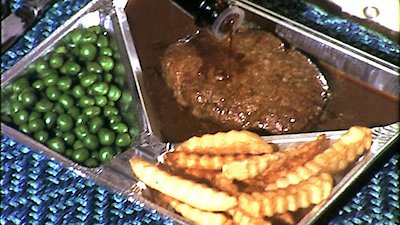
The Food That Built America Season 2 Episode 10 The TV Dinner
- TVPG
- April 11, 2021
- 42 min
-
(52)
In season 2 episode 10 of The Food That Built America, titled "The TV Dinner," viewers are taken back to the mid-1950s, a time when television was becoming increasingly popular in households across America. This episode explores how the invention of the TV dinner changed the way people ate and how companies competed to create the most delicious and convenient frozen meals.
The episode begins with a brief history of how frozen food came to be. We learn about Clarence Birdseye, who discovered how to freeze food quickly and efficiently, and the growth of the frozen food industry in the 1930s and 40s. But it wasn't until the 1950s that frozen dinners really took off, and that's where we begin our story.
As television sets became more affordable and more and more families were able to afford one, they found themselves needing quick, easy meals that could be eaten while sitting in front of the TV. This is where the idea for the TV dinner came in. The first TV dinners were created by C.A. Swanson & Sons, who were primarily a poultry company at the time. They had a surplus of turkey after Thanksgiving, and rather than letting it go to waste, they decided to create a frozen meal that could be heated up in the oven and eaten on a TV tray. And thus, the TV dinner was born.
The episode explores the early days of the TV dinner, with a focus on the competition between Swanson and rival company, Banquet. Both companies were vying for dominance in the frozen dinner market, and each had their own ideas about what would make the perfect TV dinner. Swanson's early meals were simple, featuring turkey, mashed potatoes, and a vegetable, while Banquet went for a more elaborate approach, with fried chicken, mac and cheese, and peas. The episode touches on how these companies went about marketing their products and the differences in their advertisement campaigns.
As the TV dinner grew in popularity, other companies began to jump on the bandwagon, and the episode introduces viewers to some of the other early players in the market. There's Morton, who created a TV dinner featuring beef and noodles, and Lundy's, who tried to differentiate themselves by using real plates and silverware in their meals. But Swanson and Banquet remained the top competitors, and the episode delves deeper into the rivalry between the two companies.
One interesting aspect of the episode is the focus on the role of women in the development of the TV dinner. With more and more women entering the workforce in the 1950s, there was a need for quick and easy meals that could be prepared in a hurry. The TV dinner provided a solution to this problem, and the episode touches on how companies marketed their meals specifically to busy, working women. We also hear from several women who were involved in the development of the TV dinner, including Ruth Siems, who created the formula for the iconic Swanson dessert, the apple cobbler.
Overall, "The TV Dinner" is a fascinating look at one of the most iconic American inventions of the 20th century. The episode manages to tell a compelling story while also exploring themes like gender roles, advertising, and the evolution of American food culture. Whether you're a fan of frozen dinners or not, this episode is sure to entertain and enlighten.
