Alan Watts On Eastern Wisdom & Modern Life Season 1 Episode 4 The Void
- TV-NR
- December 31, 1959
- 29 min
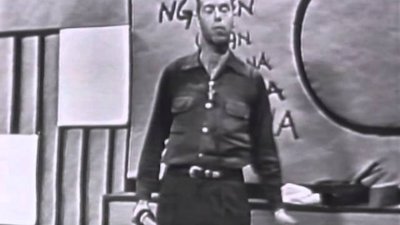
In "The Void," the fourth episode of season one of "Alan Watts On Eastern Wisdom & Modern Life," the renowned philosopher, speaker, and writer Alan Watts takes his audience on a journey through the concept of emptiness in Eastern philosophy. Watts exposes viewers to the idea that there is more to nothingness than meets the eye, giving them a chance to explore the mysteries and possibilities of the void.
Through his colorful and captivating language, Watts details the concept of Buddhist emptiness or Sunyata and how it can transform our understanding of the world. At the outset, Watts makes it clear that the idea of the void is not about nothingness in a literal sense but instead focuses on the concept of impermanence. The episode revolves around the idea that, rather than being an absence of something, nothingness can be seen as an invitation to let go of attachments and experiences.
As Watts delves deeper, he explains why Eastern philosophy sees emptiness as central to its core. He notes that it is the only way to get to the real essence of life. Watts goes on to discuss how, in Eastern philosophy, emptiness brings about something new; it creates an opening or a vessel for a new thing to occur, and thus it cannot be considered nothing. This key point is where the conversation of the episode centers.
Watts posits the idea of the black hole as a physical manifestation of the Buddhist principle sunyata, offering an apt metaphor for understanding the concept of emptiness. However, he goes further by suggesting that the black hole provides humans with a rare chance to understand a kind of nothingness that produces something new.
The episode helps viewers understand the similarities between Sunyata and science. Drawing parallels between scientific phenomena like Heisenberg’s uncertainty principle and wave-particle duality, and the Buddhist concept of emptiness, Watts shows how the two approaches have more in common than many might perceive.
Finally, Watts brings the conversation back to everyday life, noting that we are all scared of the void and the unknown. People, he argues, are usually uncomfortable with emptiness and feel a need to fill it up with something. They often do this by seeking constant stimulation from social media, phones, or other gadgets. According to Watts, this only makes it harder to experience the richness that emptiness and nothingness can provide.
In conclusion, "The Void" offers a thought-provoking and insightful conversation about the concept of emptiness. Alan Watts takes viewers on a journey, one that is rich and thought-provoking, exploring the concept of Buddhist emptiness and how it can transform our understanding of the world. The episode seamlessly weaves together perspectives from science and Eastern thought, offering viewers a chance to experience a different way of looking at the world. Most importantly, through this exploration, "The Void" invites viewers to let go of what they know, opening themselves to new possibilities.